In Oulad Sassi Country - Following in the Footsteps of the Nomads
A camel trek on the territory of the Oulad Sassi, between black sandstone cliffs and secret palm groves of the western Adrâr.
Duration
15 days
Ideal seasons
Jan, Feb, Mar, Nov, Dec
Style
Expeditions
Comfort
rustique
Travelers
Solo, With friends, Couple
The spirit of travel
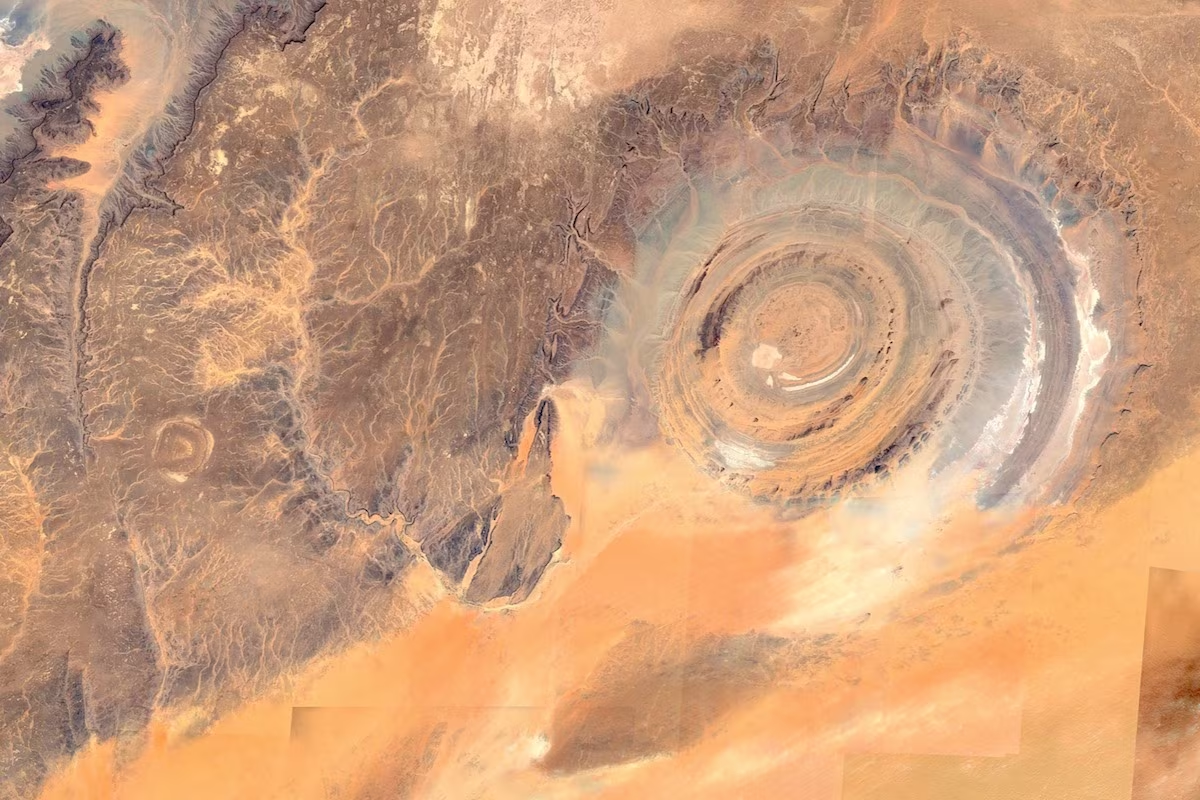
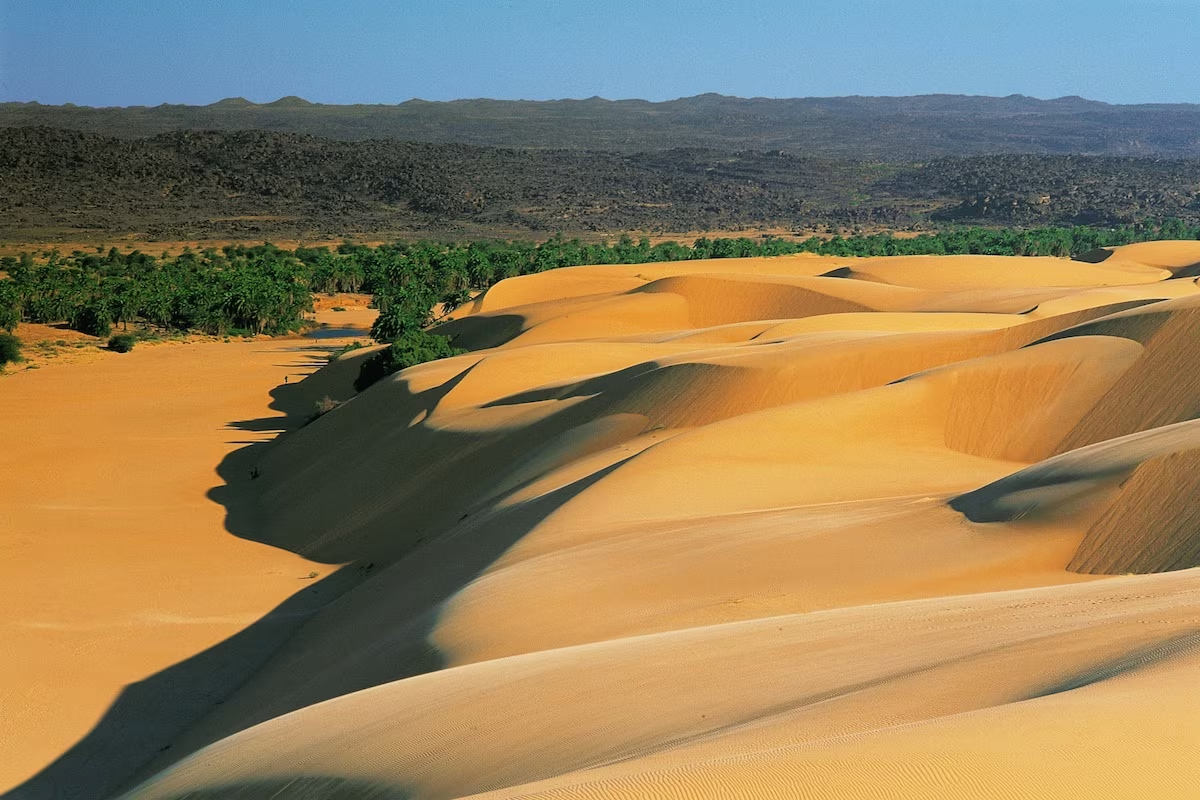
Our camel trekking takes place on the territory of the Oulad Sassi tribe of the Ideichily confederations. The western part of the Adrâr Mauritanien offers a very wide diversity of landscapes. The plateau is crisscrossed by a dense network of faults of tectonic origin where wadis flow. Here the blonde ergs come to run aground against the raised slabs of black sandstone. Erosion has shaped the landscapes over millennia.
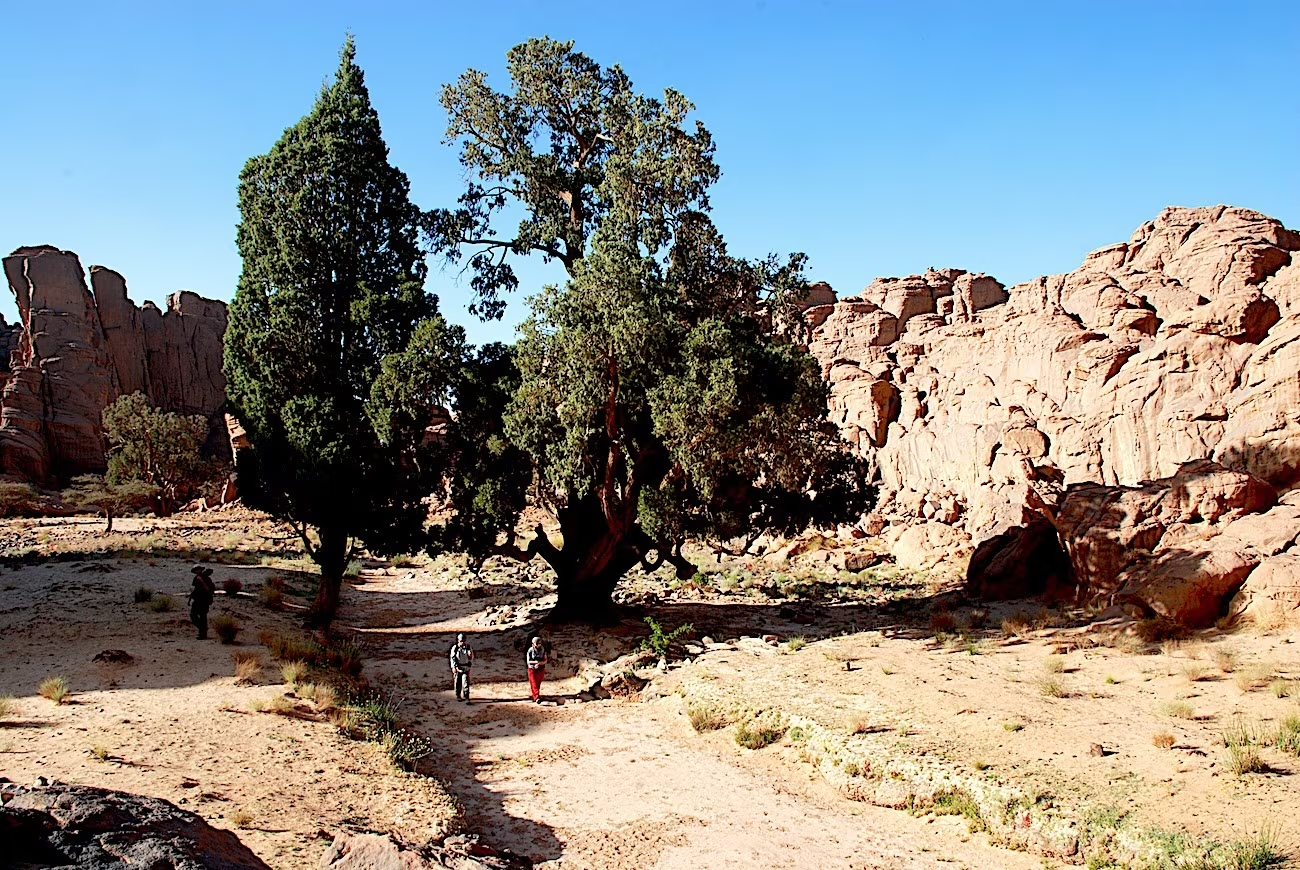
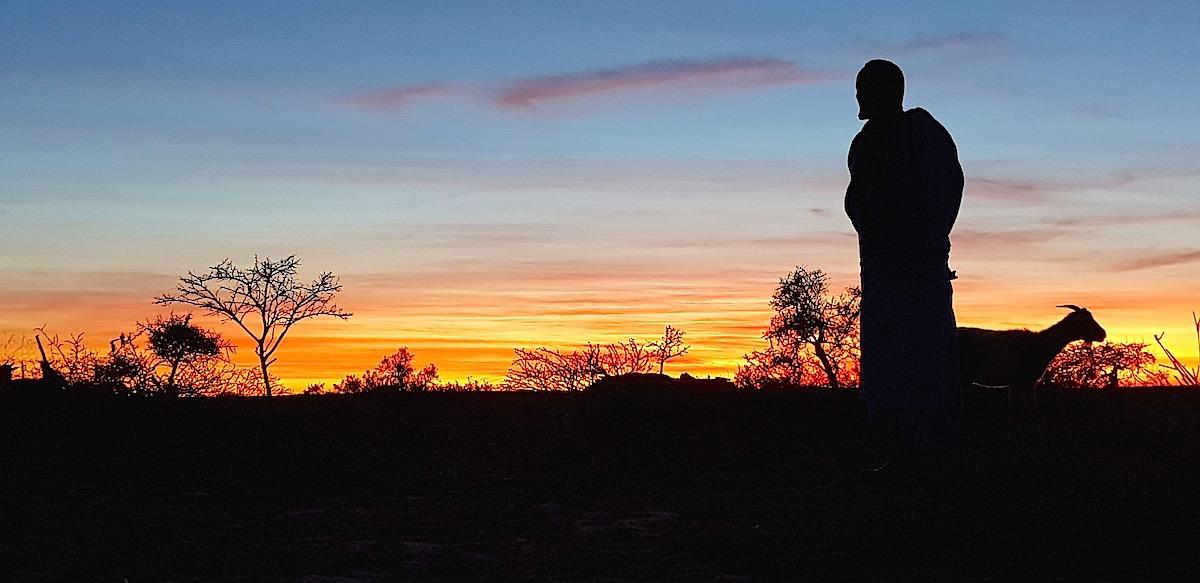
At the bottom of the valley, the gentle palm groves stand out from the steep and austere mountain massifs. In secret crevices are set guelthas with clear waters. The sedentary farmers, established in the palm groves, continue their traditional life in this Sahara which can be generous. On the surrounding plateaus, nomads in search of pasture for their herds mark their time with long seasonal movements in search of life-saving rains. Their white or brown tents are there, hidden from view, in the terrain's undulations.
Here in central Adrâr, the complementarity between these two necessities of life takes on its full strength.
This journey is of a moderate sustained level : 5 to 8 hours of hiking per day. Excellent physical condition necessary as the stages can be long. You must be able to maintain this pace for several days in difficult terrain. This region of the Adrâr is low in altitude, it can be very hot there. By clicking on the link, you will find all the difficulty levels of our trips.
The stages of your journey
Highlights
Day-by-day itinerary
International flight to Nouakchott
Once formalities are completed, meet in the hall of the Nouakchott airport terminal.
Transfer to accommodation.
Departure towards the Adrar plateau
After leaving the city and its suburbs, we take the beautiful paved road that heads northeast towards the mining town of Akjoujt.
The Trarza region and the Atlantic coast are now behind us, the vegetation changes and becomes increasingly Saharan.
The vast sandy plains of Inchiri lead us towards the somewhat surreal city of Akjoujt. A mining industry is present there and, since the Chalcolithic period, Man has been extracting copper, gold and other materials.
Gradually the landscape changes. You are now driving in the Amsaga region.
In the distance, to the east, the dark barrier of the Adrâr begins to take shape. You pass the great alluvial plain of Yagref and the village of Aïn Ahel Taya. The road crosses the first ridge of the Adrâr.
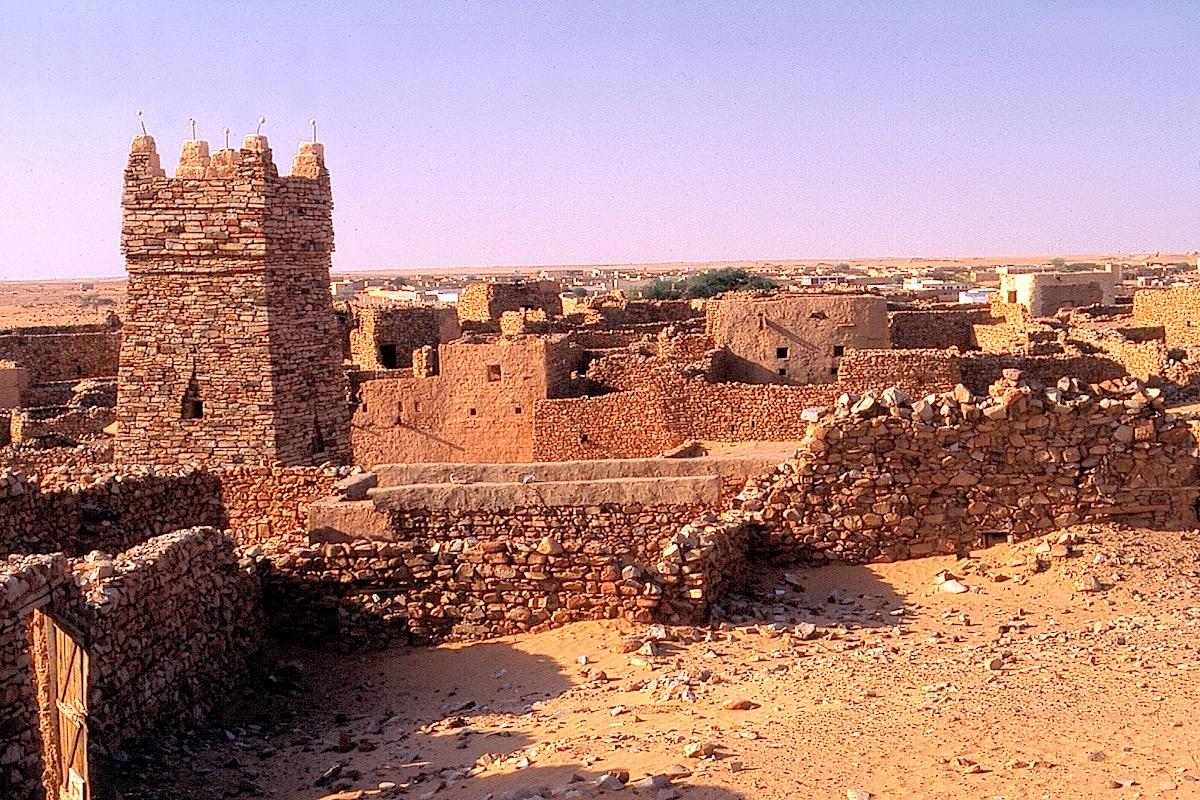
Continuation towards the ancient city of Chinguetti.
The track to climb onto the plateau (dhar) is currently in good condition, but it can be degraded by rains that occur at the end of summer.
In the afternoon we take time to visit the old town: library(ies), palm groves and gardens.
The ancient city of Chinguetti
Chinguetti was founded by the Ida Ouali around 1525, upstream from Abweyr, which has since disappeared and was itself created in 1261.
The probable etymology of the toponym shingitî would be:
well of the horse, from Soninké: si: well + n: of + gede: horse.
Chinguetti was the most active commercial center and the most important city in the western Sahara. It was considered by Mauritanians as the 7th holy city of Islam with its 11 mosques, its 100 wells and its circle of scholars.
In 1675, a massacre perpetrated by part of the Ida-ou-Ali led to the breakup of the group whose survivors founded another ksar in Tagant, Tidjikja.
Today only one mosque remains and the memory of prosperous periods…
The main tribes that make up its population are the Ida-ou-Ali, the Laghlal and the Oulad Gheilan.
With their narrow and winding streets, their numerous dead ends, their low and dark houses made of local materials, their near absence of squares and communal spaces, Chinguetti and Wadâne have the structure of old ksour densely huddled around their mosques.
On the trail of the western Adrar
Chinguetti → Oued El Bhair
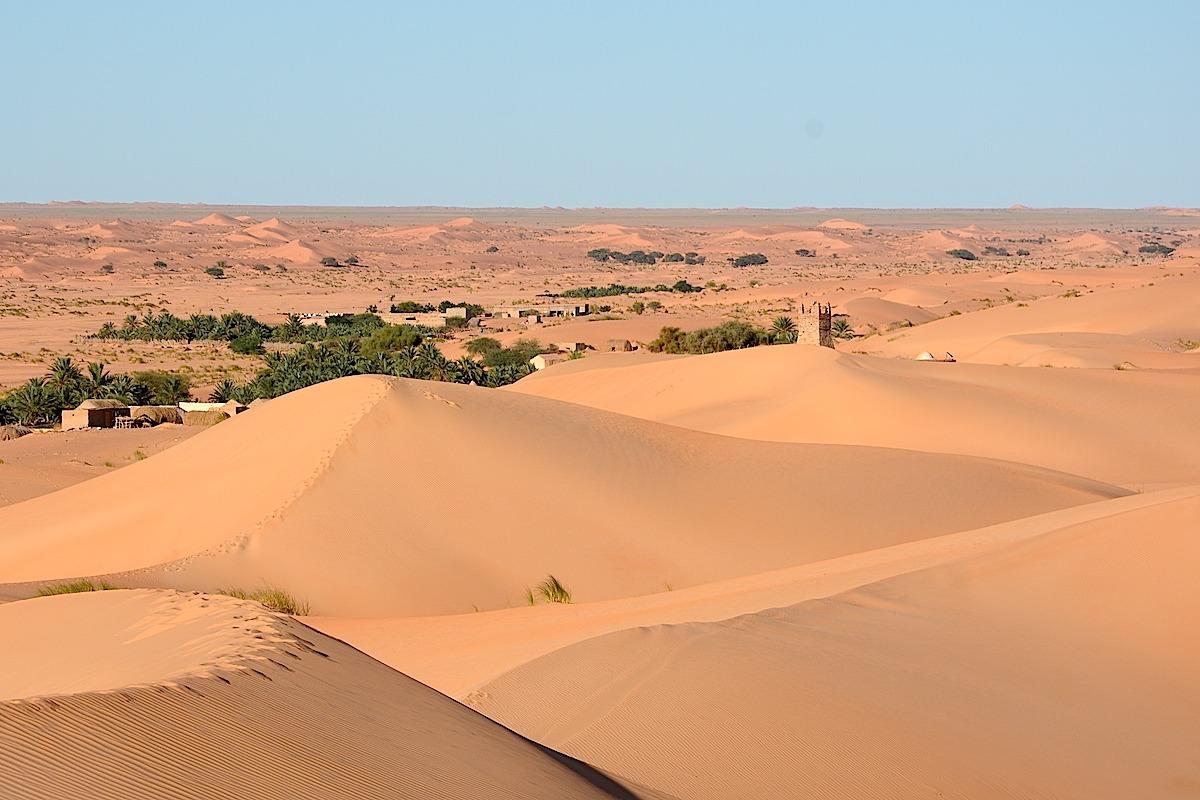
We continue our transfer by 4x4 vehicle. The erg Warane extends south of the city. We drive along it for about forty kilometers. Then, after crossing the sandy ridge of Zarga, across black sandstone plateaus, we reach the fractured zones of the Adrar border. After crossing the wadi Timinit, we now drive on bare regs interspersed with wadis sheltering a few palm groves.
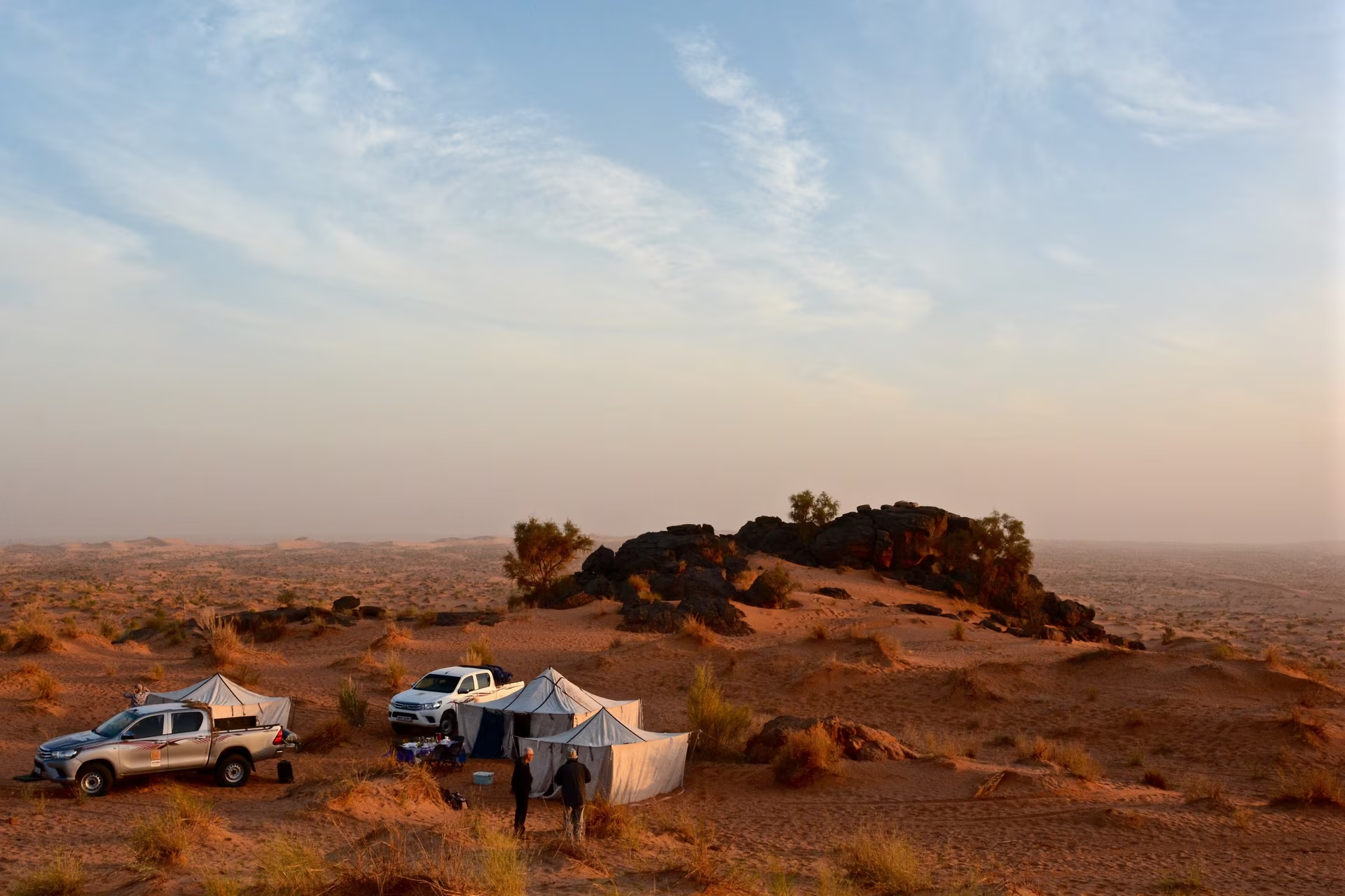
In mid-afternoon, the vehicles head down a steep and rocky descent that leads to the valley floor; we rejoin our camel team in (Tarf Laghmagh). Here, in central Adrâr, the landscapes contrast sharply with the rectilinear horizons of the great dhar of Chinguetti. The terrain is uneven and the black sandstone ridges dominate deep U-shaped valleys. After unloading them, the vehicles head back to Atar. We camp on the bank of the wadi El Bhair.
On foot between villages, gorges and the dunes of Taffoujert
Oued El Bhair → Erg Taffoujert
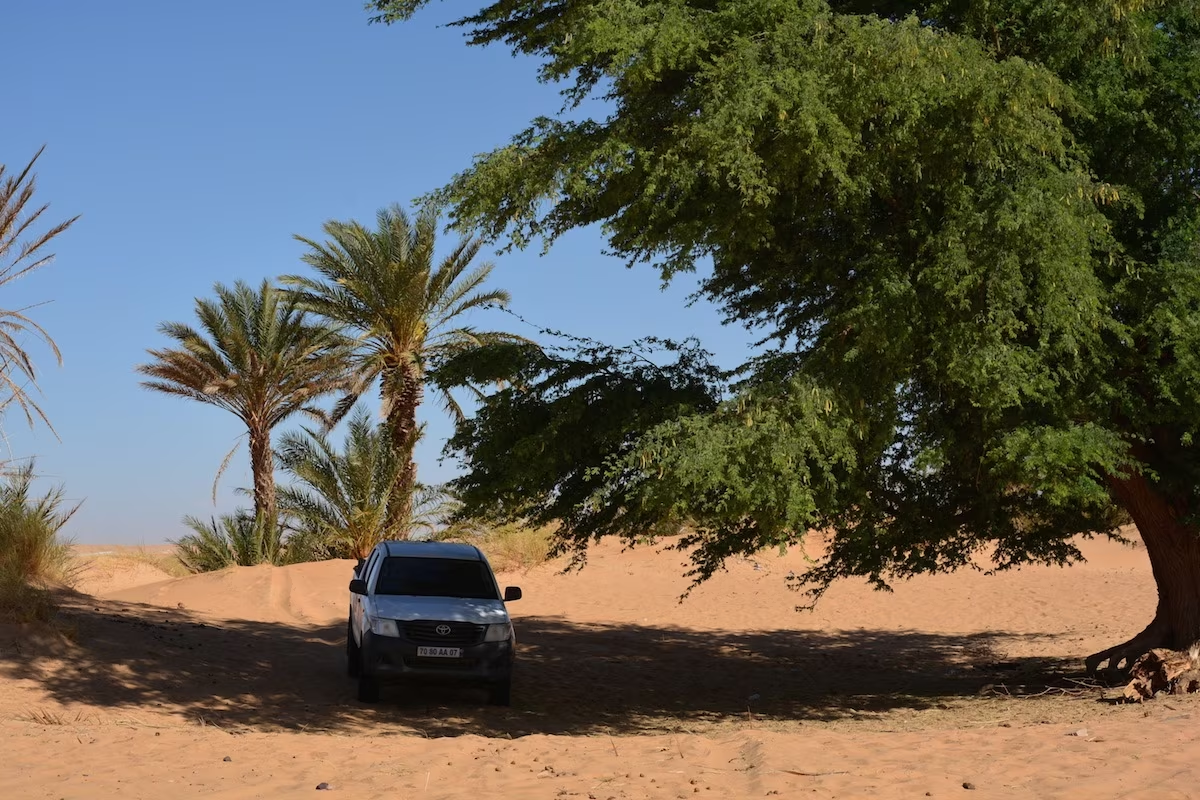
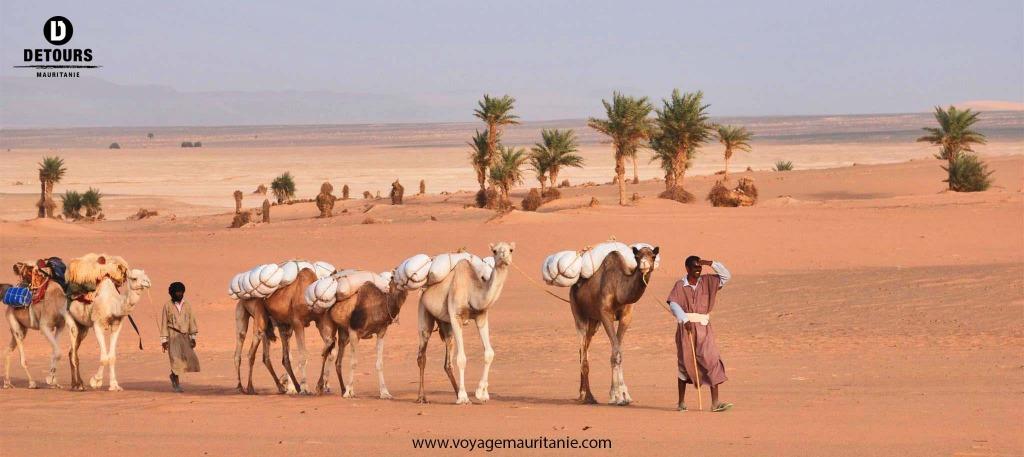
Beginning of the camel trek. The mauve cliffs stand out strikingly against the dense green of date palms.
White sand adds a soft note to this landscape. On foot, we make our way sometimes through the valley floor, sometimes along rocky cornices to reach the Gleïtat El Hamar, which are water holes set in a rock fracture.
We discovered a small rock art site there in 1998. We gradually return to the overflow zone of the Abteilli wadi. The camp is established on the northern edge of the Taffoujert erg.
Daily routine of camel trekking :
In Mauritanie, the rhythm is generally as follows:
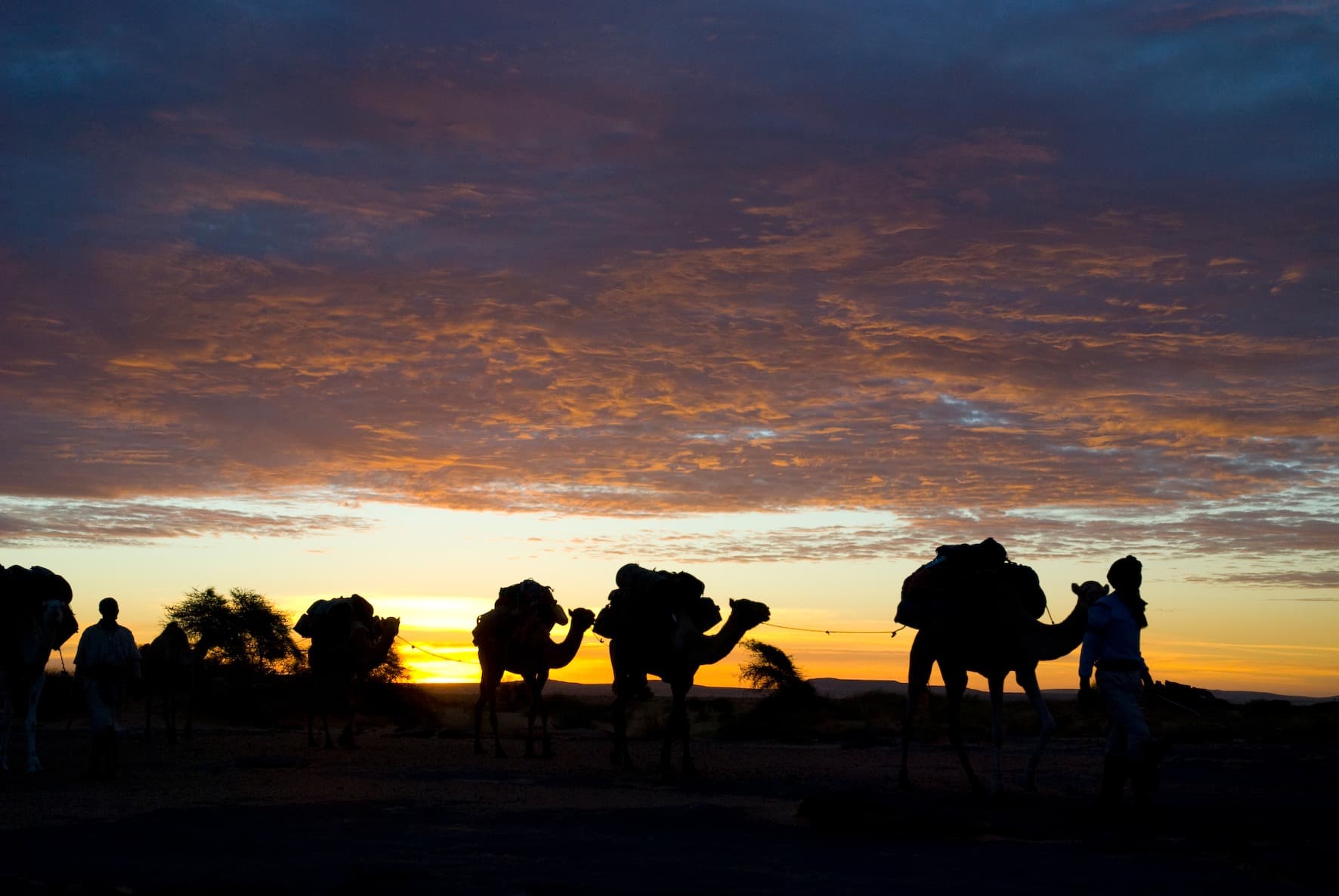
Wake up at sunrise. At breakfast time, each participant brings their travel bag and mat so that the camel drivers can quickly distribute the loads and saddle the animals.
Departure between 7 and 8 a.m., and walking until 11 a.m. or 12 p.m. depending on the season and stages.
The midday break can be long due to the hot hours of midday. The camels are systematically unloaded and led to pasture.
After lunch: 2.5 to 3 hours of walking, depending on the stages.
Arrival at the end of the day at camp, which leaves the early evening free before dinner and the evening gathering.
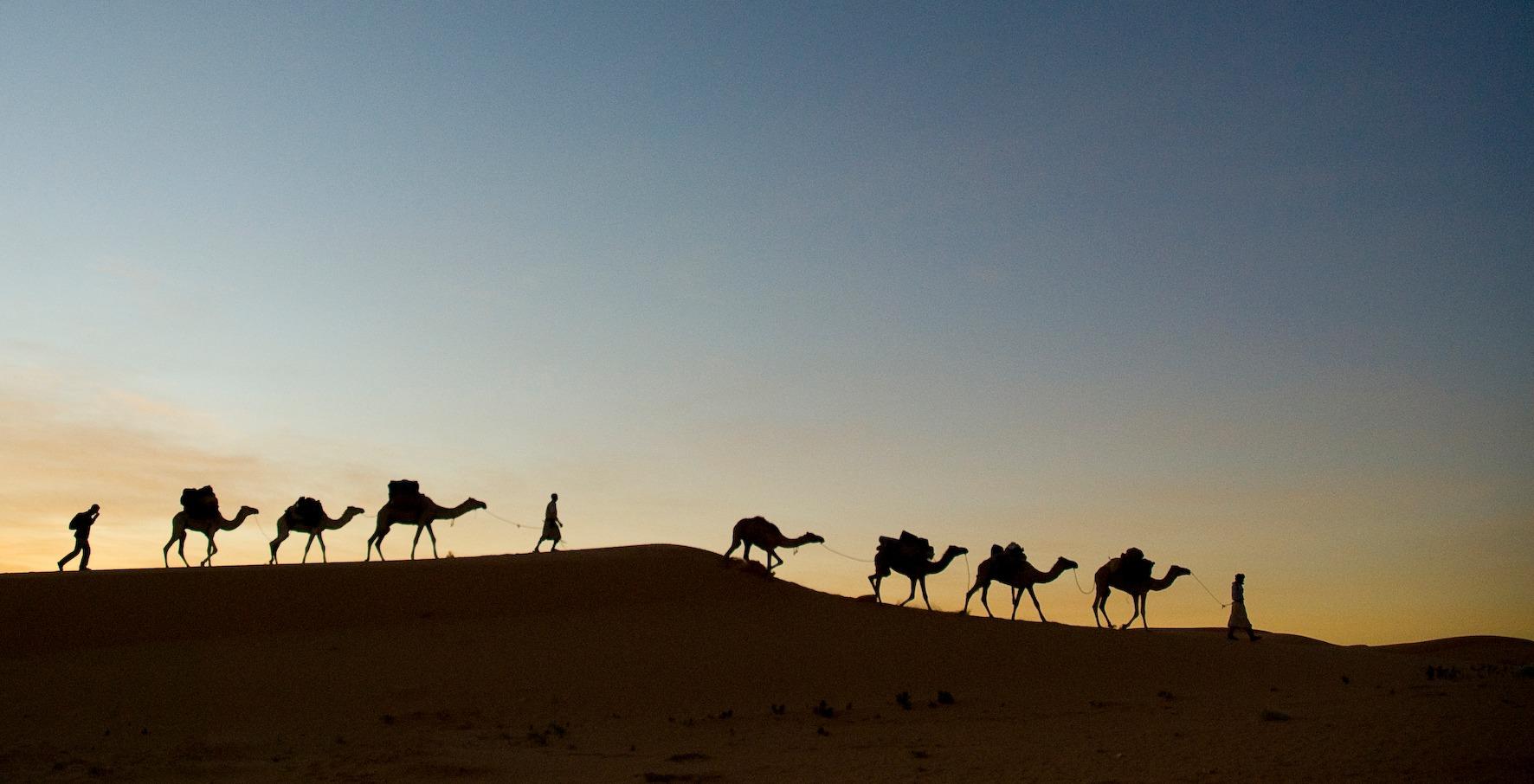
Offshore navigation towards the black mountain
The great dunes of the Taffoujert erg develop almost all the way to the natural depression of the Oued El Khatt, between the plateaus of the western Adrâr and the Tagant.
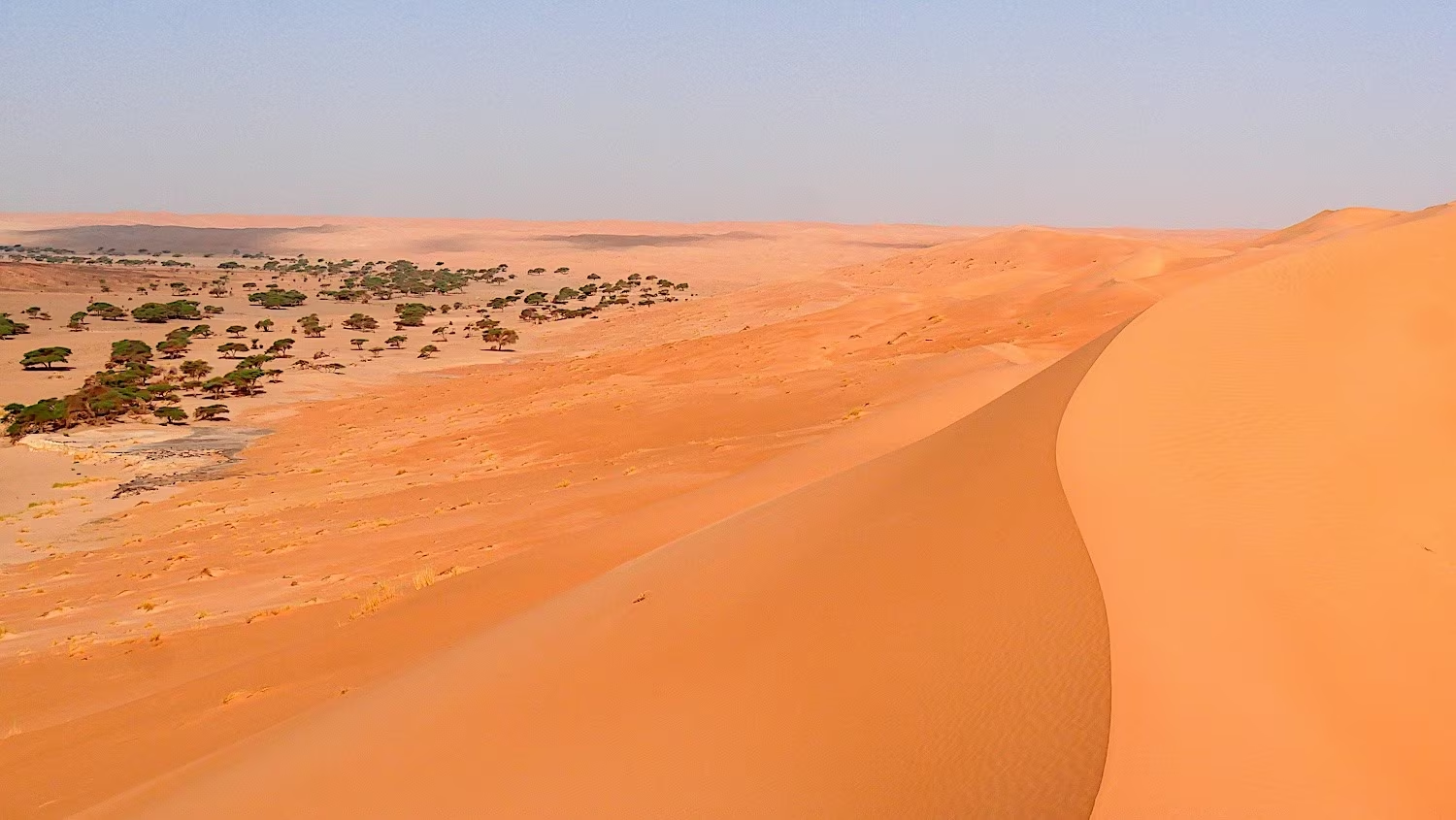
By crossing the first dunes of the northern part of the erg, we discover the Oued Tibounkrine. This magnificent wadi reveals its alignment of trees with varied species and descends into the golden erg.
During prosperous years, numerous gardens stretch across the entire furrow traced by the wadi. In the distance, the guelb Ajat rises and imposes its dark mass above the sands. The aklé, in certain years, is very dense and the caravan advances with great difficulty and sometimes avoids the massif by going north. We cross the aklé that separates us from the guelb Ajat. We settle for the night at the foot of this rocky peak.
In small valleys, temporary wells are occasionally dug. The Ideichili nomads have the habit of settling in these areas of the Adrâr during the height of the dry season. As spring approaches, they often resume their migrations toward the southwest, toward the pastures of Bou Nagâ or Timassoumit, to meet the African monsoon.
The Oulad Sassi are part of the Ideichili tribal confederation. The Ideichili have always enjoyed a certain autonomy with respect to the Hassan tribes and the amiral authority. They were a source of almost permanent contestation against various successive powers. French penetration in Mauritanie was temporarily destabilized by the death of X. Coppolani (head of the pacification mission in Mauritanie), killed in Tidjikja on May 12, 1905 by an armed band essentially made up of members of the Ideichili tribe.
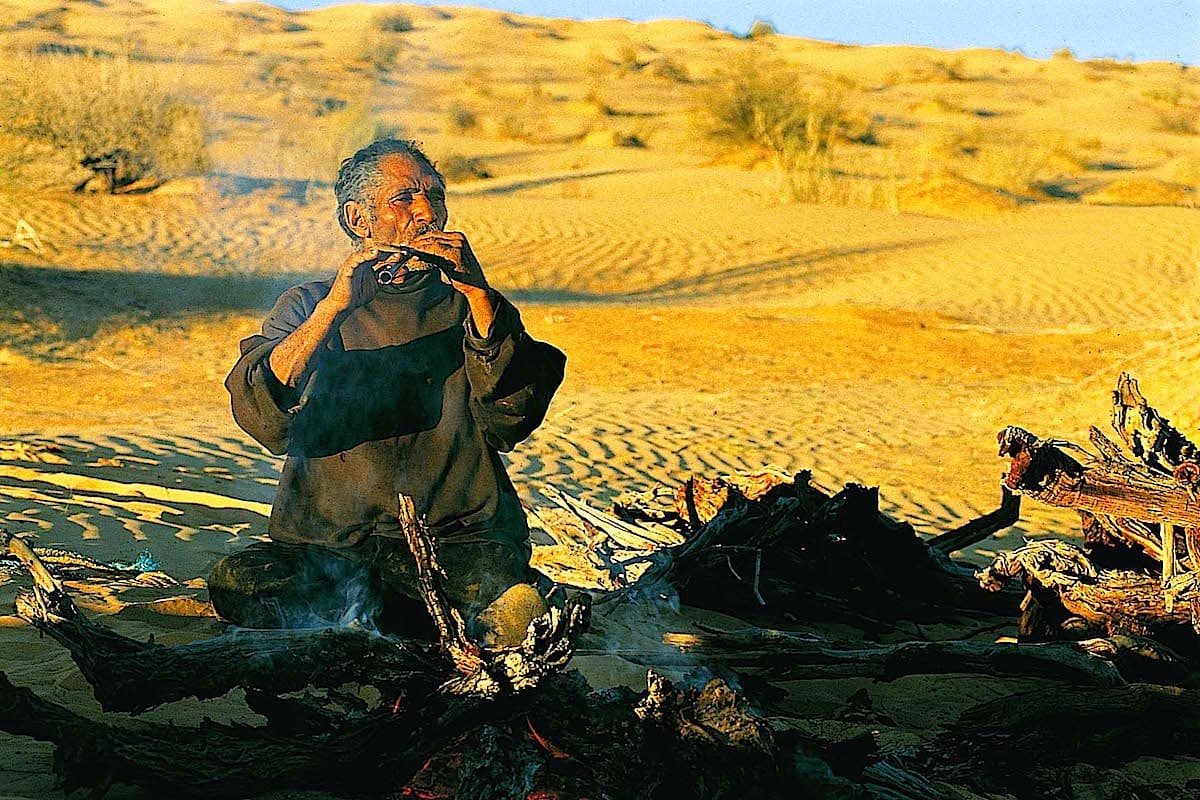
The Sweetness of the Bou Aboun Depression
Guelb Ajat → Bou Aboun
Bypassing the Ajat escarpment to the north, we return to the dunes to reach the small palm grove of Lourdiyya which welcomes us for the midday break. Following a northerly walking axis and after crossing a small pass, below unfolds the superb and generous valley of Bou Aboun. The white sands contrast sharply with the rocks baked by the sun.
The bottom of the basin may be, in certain years, only a vast field of traditional crops such as millet, sorghum or a variety of cucurbitaceae known as voundi in Hassaniyya.
This vegetable is very important in the diet of the Maures. The flesh is barely used but the large seeds are dried and ground. The flour thus obtained is used in the preparation of porridges for children, and soup for the month of Ramadan. Sometimes, when the sky proves much less generous, only acacias occupy the space. Bou Aboun is then returned to the silence of the desert.
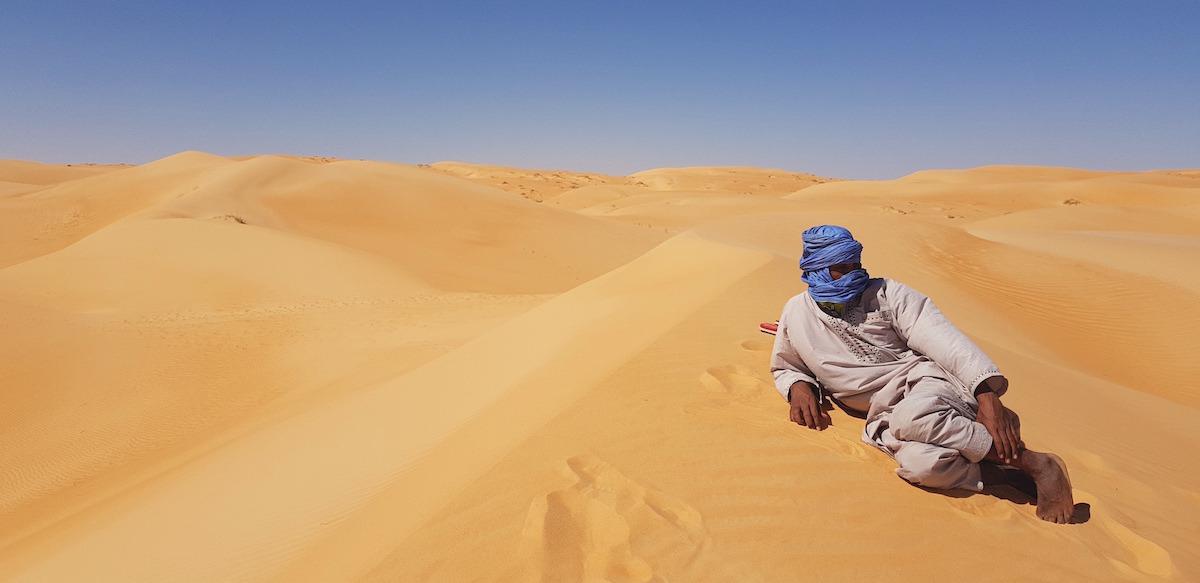
A reg with black pebbles and the edge of the Adrâr
Bou Aboun → Foum Tiguent
After leaving the bottom of the depression via caravan trails traced by centuries of commercial trade, we reach the two gueltas El Boul.
The mineral austerity of the reg reasserts itself. To the northwest rises a mountain chain and, from its highest point, the panorama is magnificent.
To the west, behind the last ridges of the Adrâr, the great dune massifs of the Inchiri and Trarza stretch out uninterrupted towards the Atlantic Ocean.
Below, the palm groves of Foum Tiguent spread out across the valley. The western edge of the Adrâr is practically reached. The various strata of sandstone are very steeply tilted and, having slipped and shifted in relation to one another, they reveal wide furrows colonized by wadis.
This geomorphological configuration characterizes the western part of the Adrâr. North of the Foum Tiguent palm grove, on white sands that climb the assault on the sandstone, we establish our camp.
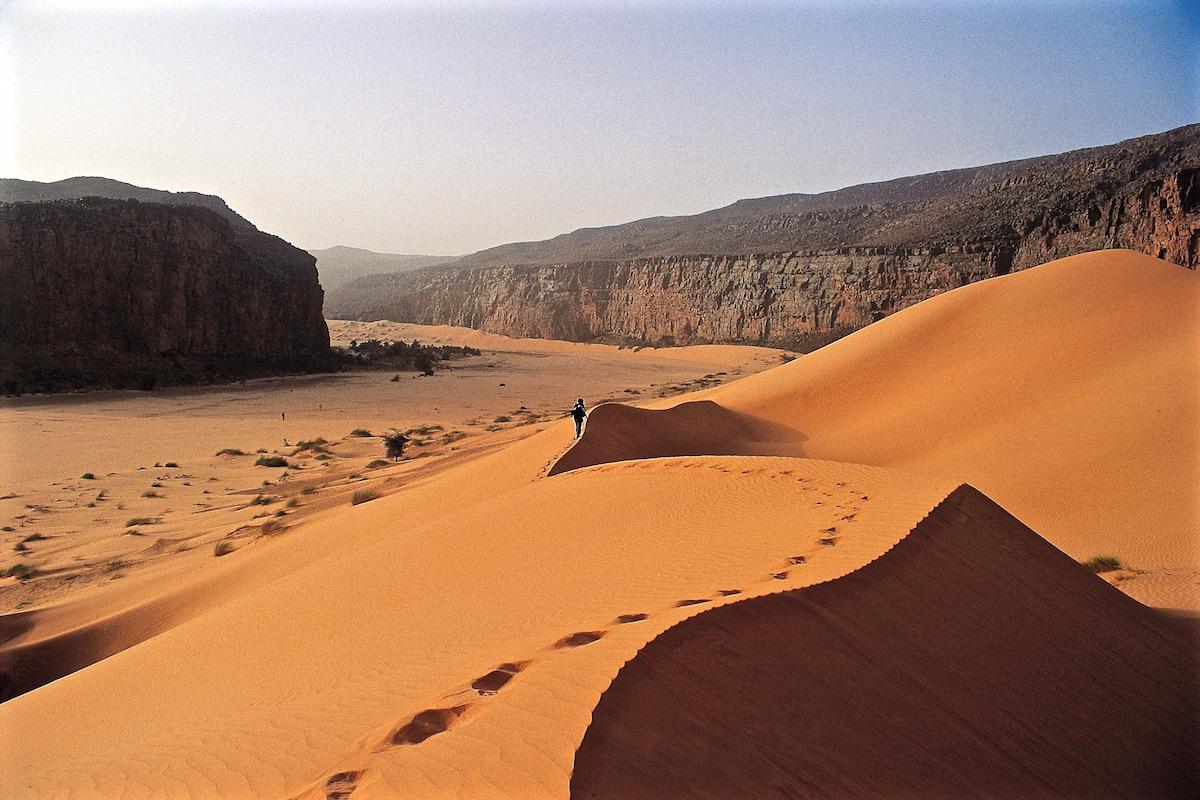
Hnouk Gorge, Cliffs and Palm Groves
Foum Tiguent → Hnouk
Despite significant human occupation, we observe wildlife that is very representative of Saharan regions.
The golden jackal (Canis aureus) is well represented as well as the fennec (Fennecus zerda) and the Rüppell's fox (Vulpes rueppelli).
A few spotted hyenas (Crocuta crocuta) occasionally prey on animals (goats or sheep) from herds. The honey badger (Mellivora capensis) and the crested porcupine (Hystrix cristata) are also present.
Among felines, we were able to observe sand cats (Felis margarita) and in autumn 1998, one or more large felines that were not really identified circulated throughout the Adrâr arc. They could be cheetahs (Acinonyx jubatus), or more likely caracals.
Their migrations were tracked thanks to the depredations they committed on the herds of donkeys in the camps. It appears they followed the transhumance routes of the Ideï Boussat nomads from the Hodh toward northern Mauritania.
Walking between rock and sand we reach the small village of E-n-Terguent. Here too, along the N'Beika wadi follow strings of palm groves and gardens. We continue our route toward the Hnouk gorge.
We spend the night upstream of the gorge.
Among the Barkhanes and the Plateau
Hnouk → El Mghaïmin
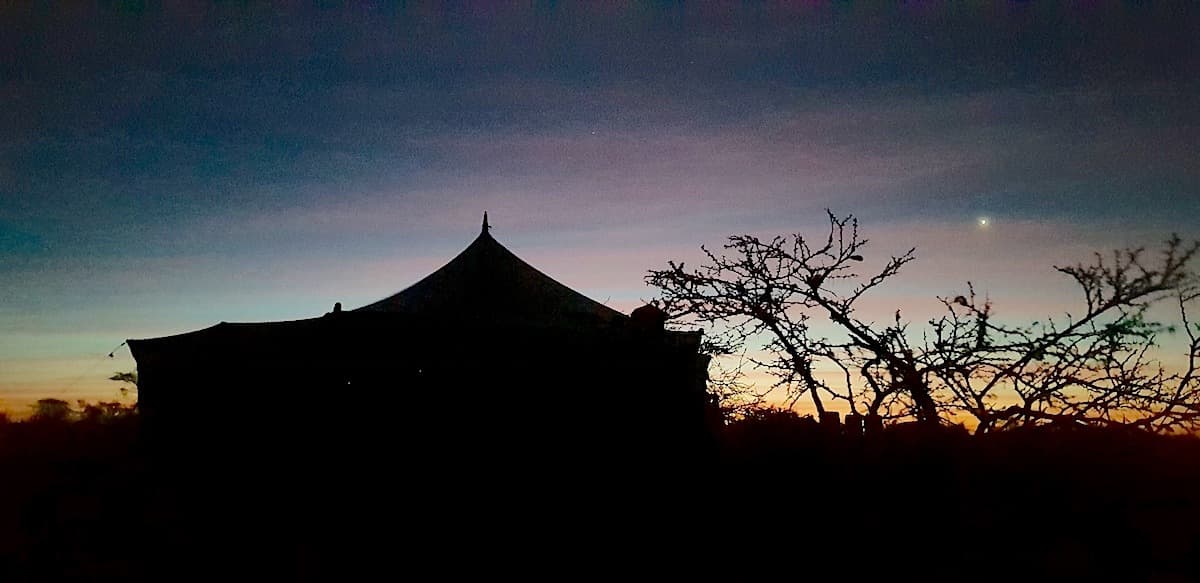
We go up the Hnouk wadi along the right bank. Leaning against the rocky massifs, imposing dunes serve as support for multiple villages made up of traditional tikkits and maghmeuls.
From the village of Nouïb, we cross one last dune massif and access the El Mghaïmin wadi. In the low points along the wadi's edge, the green ribbon of palm trees sometimes gives way to thick tamarisk groves. The vegetation, while not very dense, is very diverse. The grara or gardens are cultivated during favorable periods.
Along our hiking route, an area of eroded rocks emerges and tongues of sand climb up the raised peaks. Here too, the sandstone is turbulent, eroded into towers, ruins invaded by sand.
The bivouac is established in the Eker wadi.
Towards the gorge in memory of ostriches
El Mghaïmin → Oudeï En Na'am
This wadi leads us to the watershed and we continue towards the Oudeï En Na'am which, perpendicular to us, is nestled at the bottom of a valley. A superb set of barchan dunes covers the bottom of the wadi before it plunges westward between narrow walls.
The large town of El Meddah, villages and palm groves
Oudeï En Na'am → El Meddah
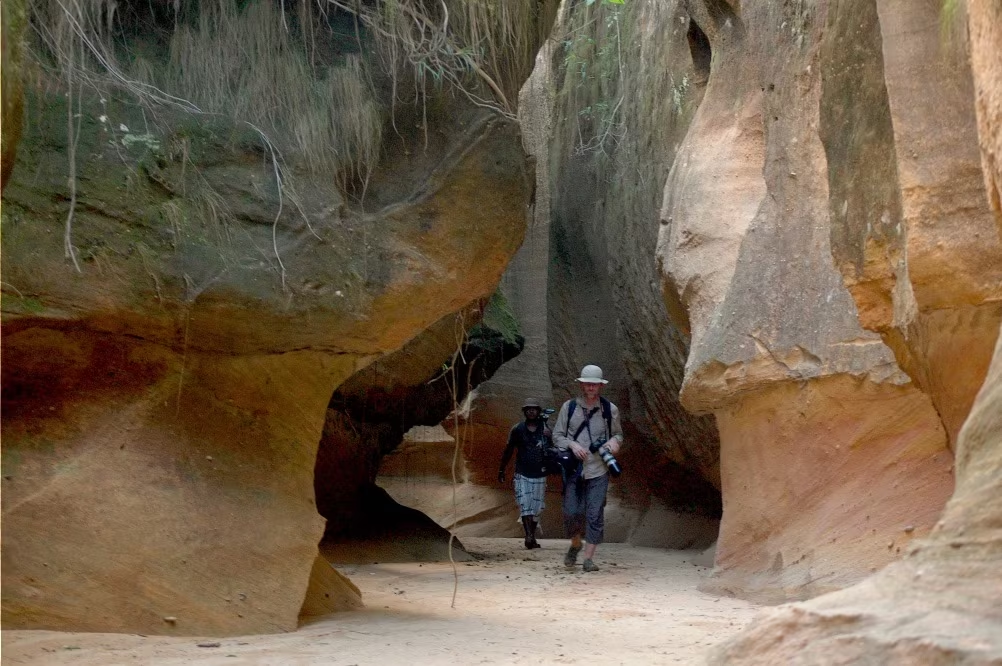
The guelta of Tajemleilit, nestled in a narrow canyon, releases a thin stream of clear water through the middle of palm trees for approximately 800 meters. Following the gorge, we emerge onto the first palm trees of the lush Amatlich region. Having reached the plateau, we now overlook the El Meddah valley.
Here, squeezed between the great dunes of the Amatlich erg and the purple cliffs of the Adrâr, the town of El Meddah develops and thrives despite its isolation. Maure society lives in near self-sufficiency and at a rhythm established for centuries. After crossing El Meddah, we camp, immersed in the dunes of the Amatlich.
Immersion in the Dunes
El Meddah → Erg Amatlich
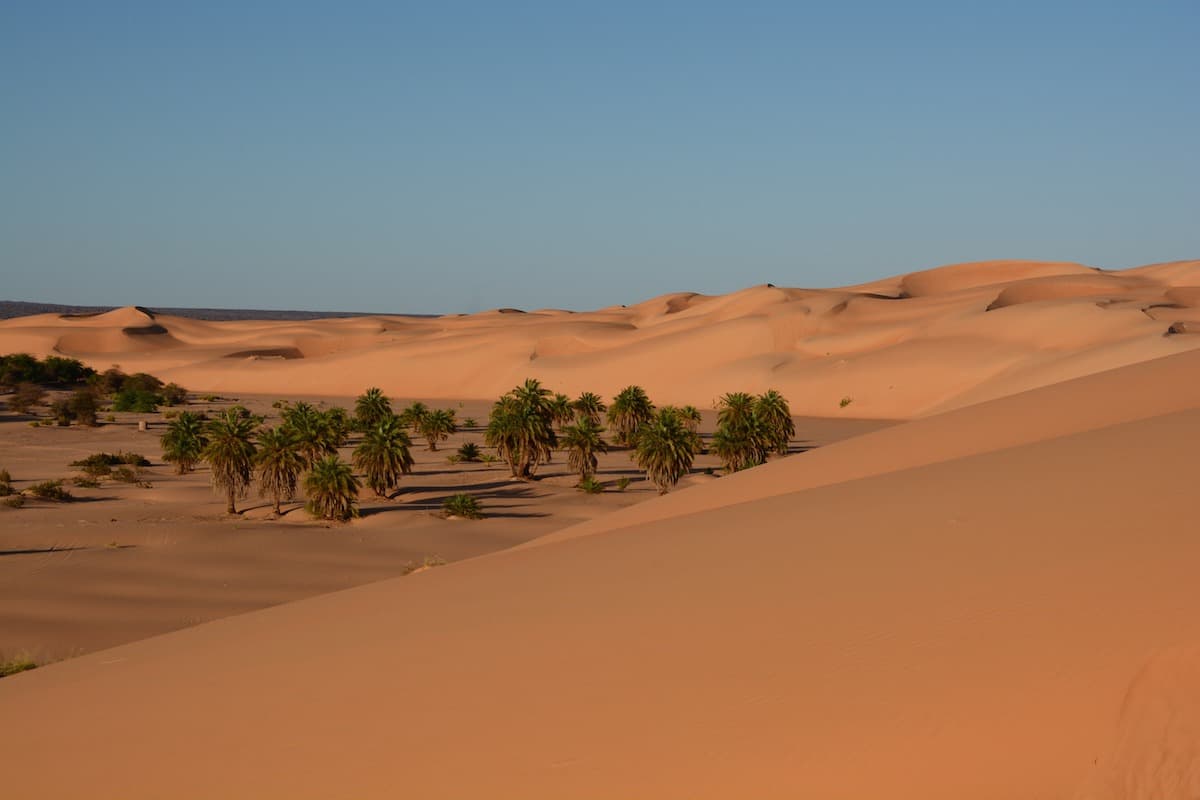
Large sand dune massifs develop, parallel to one another and perpendicular to the axis of prevailing winds. The large interdune corridors allow relatively easy caravan circulation. We cut across the massif by following lines of sumptuous crests. North of the erg, the rock reclaims its rights. It is fractured, eroded and forms in some places genuine labyrinths. Gueltass, such as Azoueiga, are nestled at the bottom of canyons and contain superb water. The exuberant vegetation shelters myriads of birds and insects of all kinds.
We return to the gentle setting of the dunes for the night.
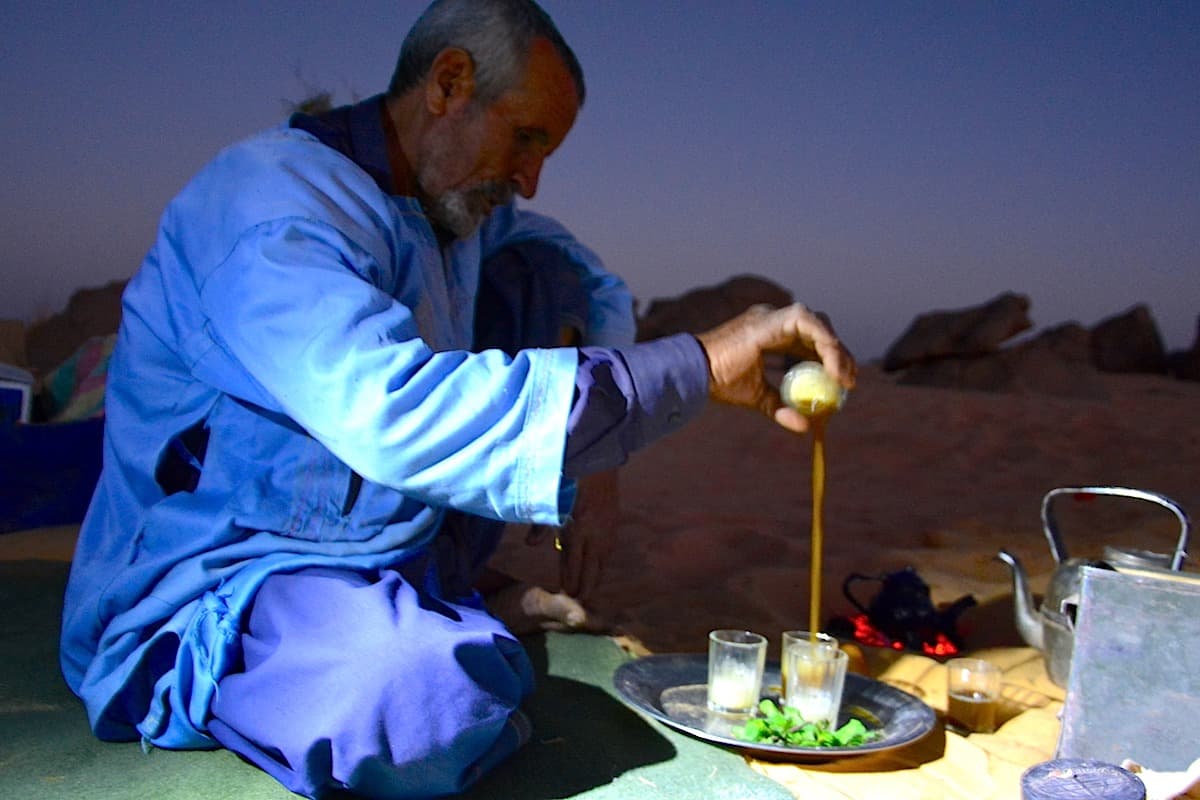
A fault line, palm trees and water
Erg Amatlich → Azoueiga
We skirt the edge of the erg and the pure lines of the dunes guide our steps.
To the north unfolds, in alternating colors, the fringe of intense green palmgroves then a mosaic of greens composed by different tree species such as Acacias raddiana (Talha), Balanites aegyptiaca (Teichot), Boscia senegalensis (Eizine).
Then comes the dark border of the Ibi el Akhdar massif at the foot of which huddle a few villages.
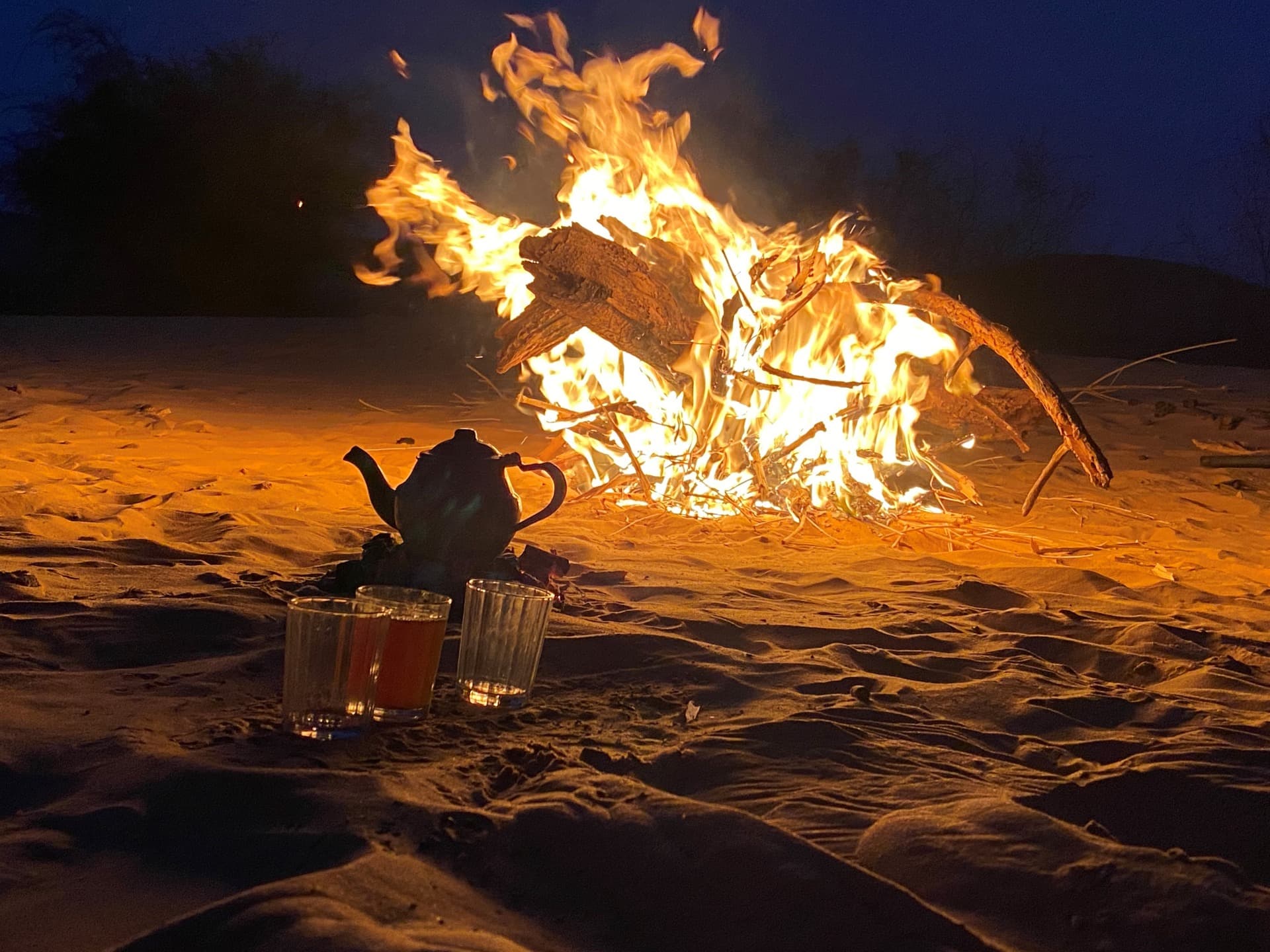
The northern border of the Amatlich, then return to the capital of the Adrar Et Tmar
Azoueiga → Graret El Vras
At midday, we return to the vehicles that ensure our transfer towards Nouakchott which we reach at the end of the day.
After a short track allowing us to leave the Adrâr massif, we take the very beautiful road towards the mining town of Akjoujt.
We continue our journey across the vast sandy plains of Inchiri. Very quickly, we reach the outskirts of the Mauritanian capital.
We settle into the hotel.
Return to Nouakchott then international flight
Nouakchott → Paris Aéroport
Visit of the city of Nouakchott,
See the fishermen's return,
Vehicle and driver at your disposal.
Following your flight schedule to France, we transfer you to the Nouakchott-Oumtounsy International Airport.
Price per person
This trip can be tailored to your preferences
This itinerary provides an excellent foundation for discovery, but it can be fully customized. Our local advisors build each trip tailored to your budget, dates and preferences.
Not included
- International flights Paris - Nouakchott - Paris,
- Insurance (illness, accident, cancellation...)
- Visa fees upon entry to Mauritanian territory,
- Personal expenses, beverages,
- Tips at your discretion.
Included
- Welcome and assistance at Nouakchott Airport,
- Transfer then transport by 4x4 vehicle,
- Camel team for hiking assistance,
- Knowledgeable local guide trained and familiar with our trips.
- All camping, kitchen and supply equipment,
- Full board throughout your trip in Mauritania,
- Comfortable guest house in Atar on a double room basis
Practical Information
Registration is considered firm and final after payment of a deposit of 30% of the total price and acceptance of the specific terms of sale.
The balance must be paid no later than 45 days before the departure date.
See our specific terms of sale for full details.
In the event of cancellation by the traveller, the following fees apply:
- More than 60 days before departure: 40% of total price (deposit retained)
- Between 60 and 30 days before departure: 50% of total price
- Less than 30 days before departure: 100% of total price
We strongly recommend taking out cancellation insurance. See our specific terms of sale for full details.
The information below concerns travelers who are nationals of the European Economic Area (EEA), Switzerland, and Canada traveling to Mauritania for a tourist stay. As entry rules may change, we recommend verifying this information with the official authorities before your departure.
Passport
To enter Mauritania, your passport must be valid for a minimum of six months after the date of entry into the country and must have at least one blank page for immigration stamps.
The document must be in good condition (no damaged, torn, or altered pages).
Visa
Nationals of the European Economic Area, Switzerland, and Canada must in principle have a visa to enter Mauritania. This visa can be obtained:
from the embassy or consulate of Mauritania in your country of residence before departure,
or, depending on current conditions, upon arrival at Nouakchott International Airport (visa on arrival), for a stay of up to 30 days.
It is strongly recommended to inquire with the Mauritanian authorities or the competent embassy before departure, as visa application procedures may change.
The authorities may request:
an exit ticket from the territory (return or onward flight),
proof of sufficient financial resources for the duration of your stay,
a hotel reservation or an invitation letter.
Health and vaccinations
No vaccinations are officially mandatory to enter Mauritania, with the exception of the yellow fever vaccine if you are arriving from a country where this disease is endemic.
However, several vaccinations are strongly recommended by health authorities:
Hepatitis A and B
Typhoid
Meningococcal meningitis
Rabies (depending on planned activities)
Update of your routine vaccination schedule (diphtheria, tetanus, poliomyelitis)
Antimalarial prophylaxis is recommended for the entire Mauritanian territory. Consult a doctor or an international vaccination center before your departure.
Security and registration
Mauritanian authorities may require the registration of foreign travelers with local police or gendarmerie services within 48 hours of arrival, particularly outside the capital. It is advisable to inquire about the obligations in place at the time of travel.
Due to the security situation in certain regions of the country, it is recommended to consult travel advice issued by the authorities of your country of residence before departure.
Traveling with children
Minors must hold their own valid passport covering the duration of the stay.
In some European countries, when a minor travels without one of their parents, an exit authorization from the territory may be required according to the regulations of their country of residence.
Other nationalities
Entry conditions may vary depending on nationality. Travelers concerned should inquire with the embassy or consulate of Mauritania in their country of residence.
To participate in our trips, it is strongly advised to be insured for evacuation assistance and medical expenses abroad.
Your local agency encourages you to review the specific policy developed with our partners CHAPKA ASSURANCES and AXA ASSISTANCE.
To subscribe to insurance, learn about coverage and rates, follow the link below.
CAP EXPLORER: The comprehensive insurance solution designed for a worry-free journey!
Choose the plan that suits you best:
Explorer'Multirisque
Explorer'Annulation
Explorer'Assistance
Explorer' Complémentaire Carte Bancaire
Specific to our trips, we strongly recommend subscribing to one of them.
If you choose to subscribe to one of these plans, the policy detailing all coverage and claims procedures are available on the insurer's website.
Your local agency will be aware of this, but only the participant is responsible for complying with claims reporting procedures. The participant should therefore keep this policy with them throughout their trip.
Chapka — Cap Explorer
Our insurance partnerTravel with peace of mind with our partner Chapka. Cancellation, repatriation, medical expenses, baggage… All the coverage for a worry-free trip.
Travel with peace of mind — I'll handle the insuranceFrequently asked questions
A tourist visa is required and is issued upon arrival at Nouakchott Airport or at the consulate. Your passport must be valid for at least 6 months beyond your entry date. The security situation requires heightened vigilance. Before booking your trip, please check with the consulate or embassy of your destination for entry requirements applicable to your nationality.
Go to the My Trips section to find all your projects.
You can send a message to your host directly from the Tea Lounge.
For a tailor-made quality trip, budget between 180 and 300 euros per day and per person, including accommodation, meals, 4x4 with driver and English-speaking guide. International flights (500-800 euros return) are additional. The desert, the Sahara train and the beaches offer unique experiences.
Your documents are accessible in the Documents tab of your trip.
Absolutely. We adapt each itinerary to travellers' profiles. For families, we prioritise relaxed paces, family-friendly accommodations, fun and educational activities, and comfortable private transfers. Our English-speaking local guides know how to capture children's attention with age-appropriate anecdotes.
It's simple. You exchange with our local team to define your wishes, budget and dates. You receive a detailed itinerary proposal within 48 hours. You adjust every detail together until you reach the perfect version. You confirm and travel with peace of mind. Your local agency remains available 7 days a week throughout your trip.
In case of emergency, contact your local agency immediately.
Payment is generally made in two installments.
Our agency is part of the Nomadays network, registered in France. You benefit from APST (Association Professionnelle de Solidarité du Tourisme) coverage, which protects 100% of your funds. Secure payment, repatriation insurance included, and English-speaking assistance 24/7 on the ground throughout your stay.

Let's talk about your adventure — Adrar
Coordinator of Mauritania getaways, based in Atar
La Mauritanie est un pays qui se découvre avec respect et patience. Mon rôle est d’aider chaque voyageur à s’en approcher dans les meilleures conditions, avec confiance et curiosité.
— Antsa