The palm groves of the Adrar in Mauritania
On the trails of Mauritanian palm groves, between golden dunes and sedentary villages of the western Adrar.
Duration
9 days
Ideal seasons
Jan, Feb, Mar, Oct, Nov, Dec
Style
Expeditions
Comfort
rustique
Travelers
Solo, With friends, Couple
The spirit of travel
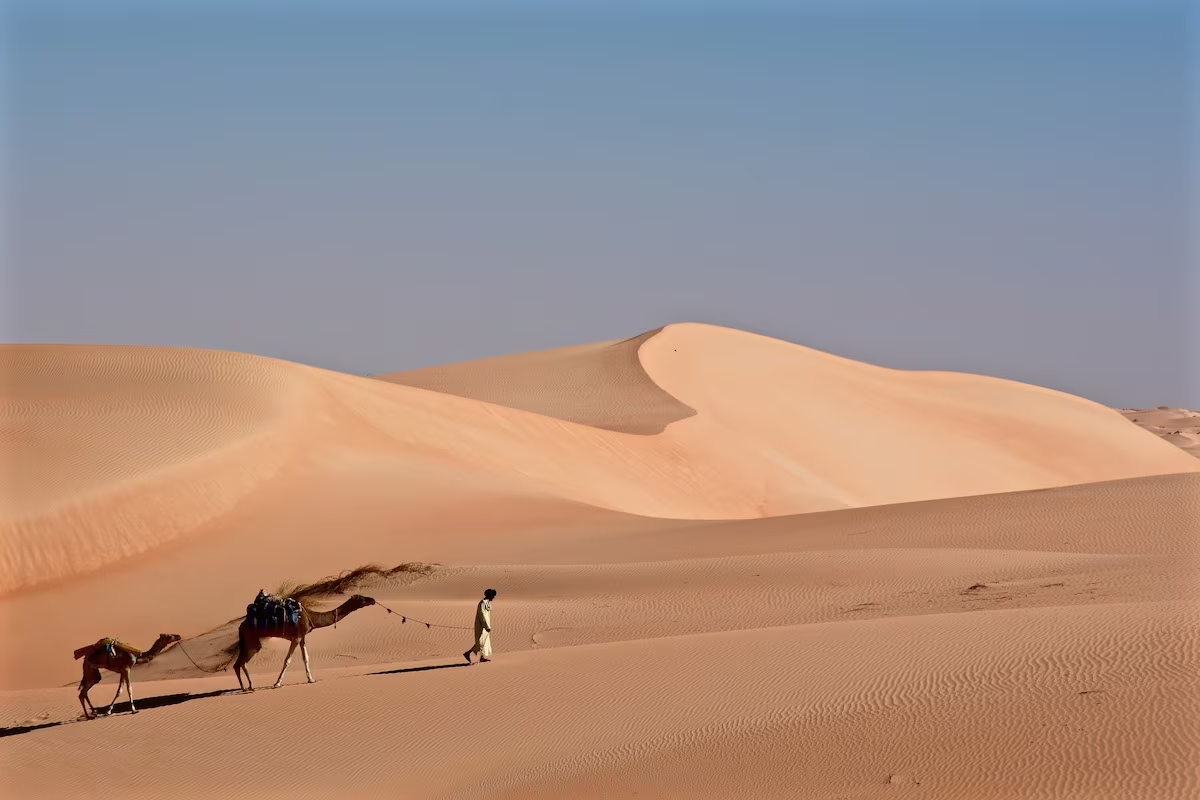
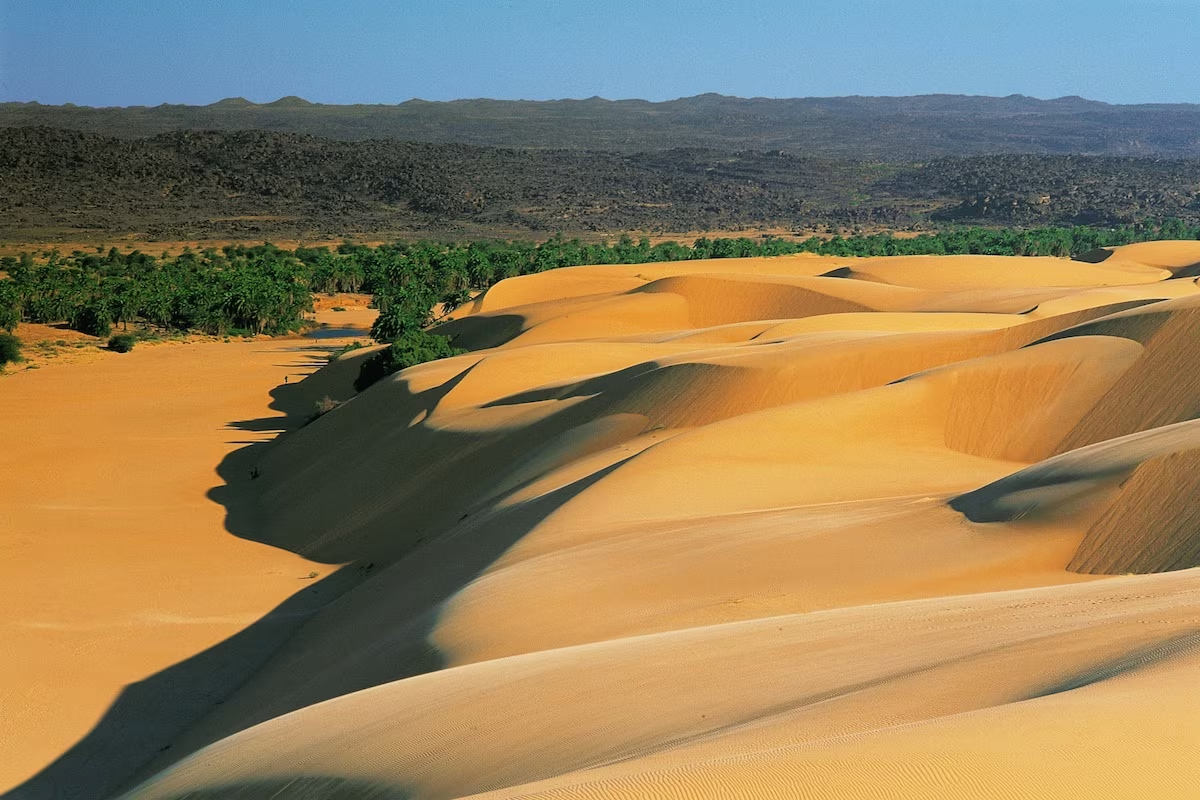
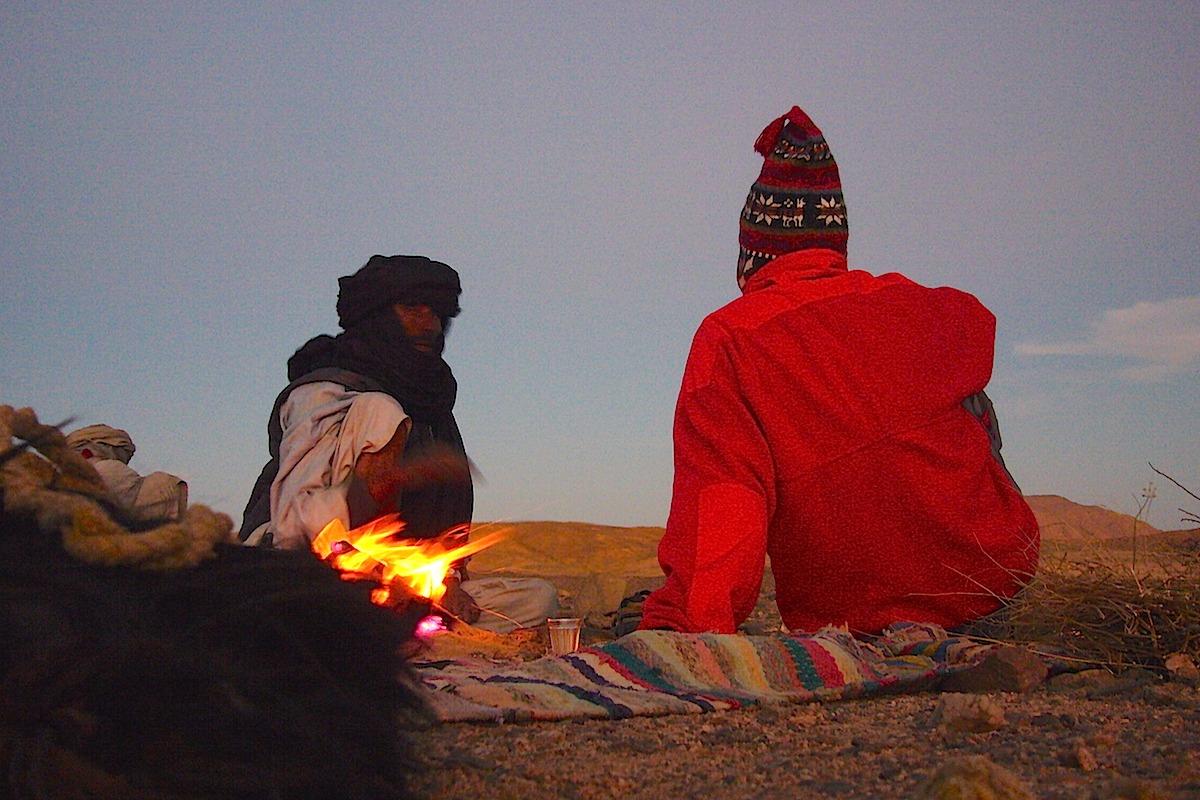
The western border of the Adrar is very populated, the Sahara is generous here. Multiple palm groves and sedentary villages dot the banks of the wadis.
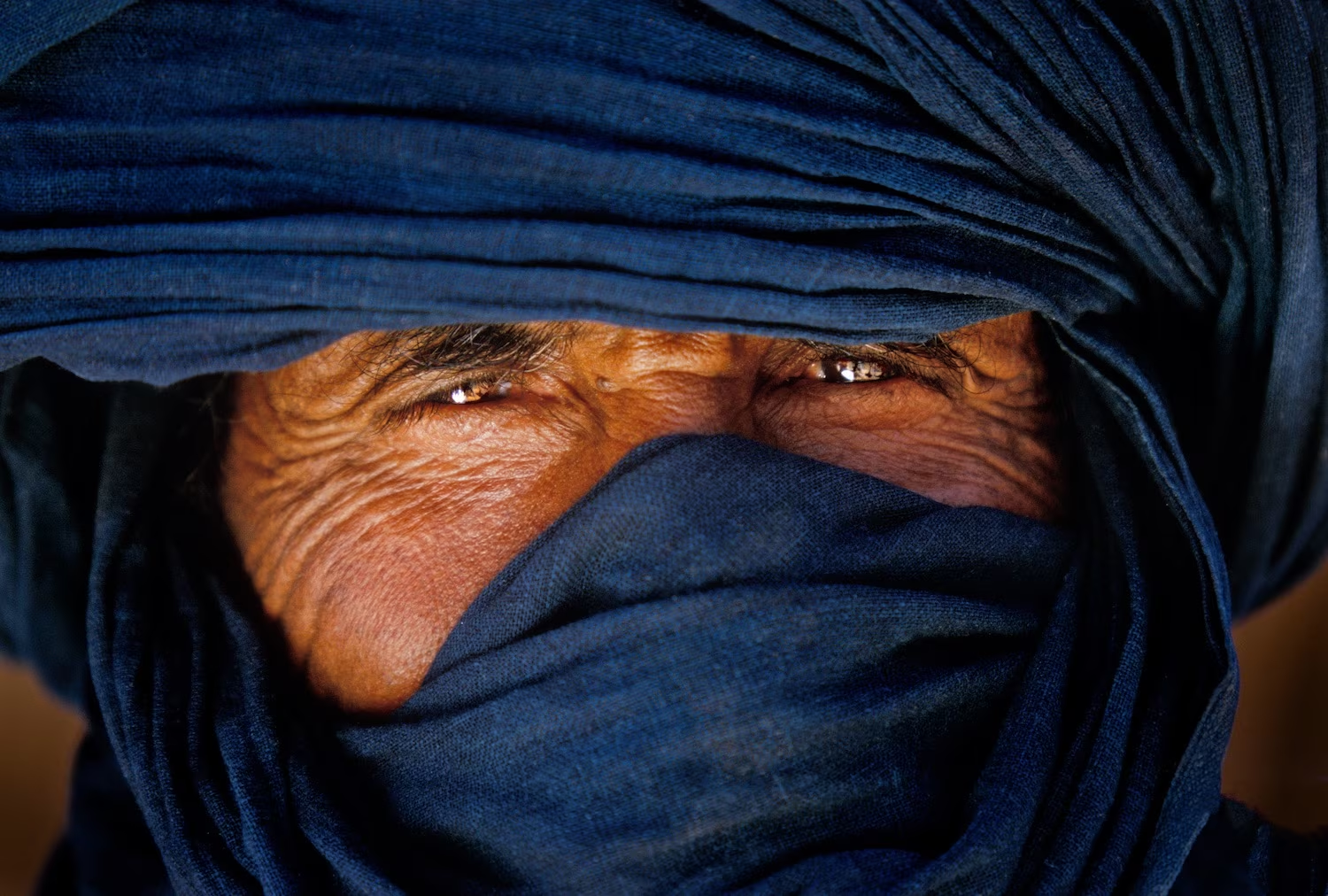
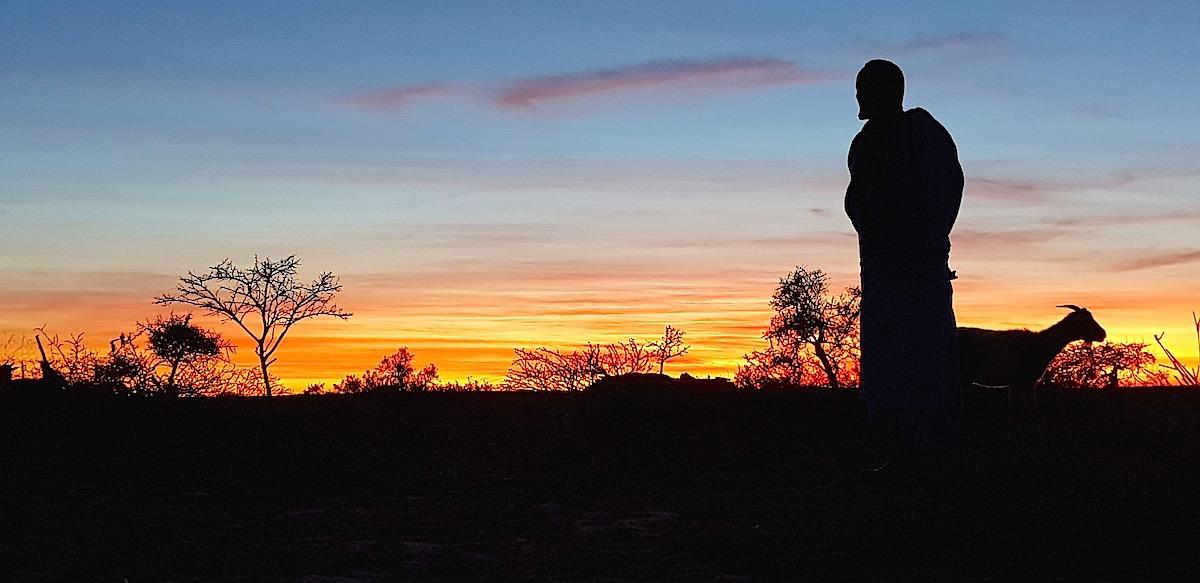
Date palm cultivation and market gardening are the main activities of the Maure tribes living in the area. Goat herding is also very common.
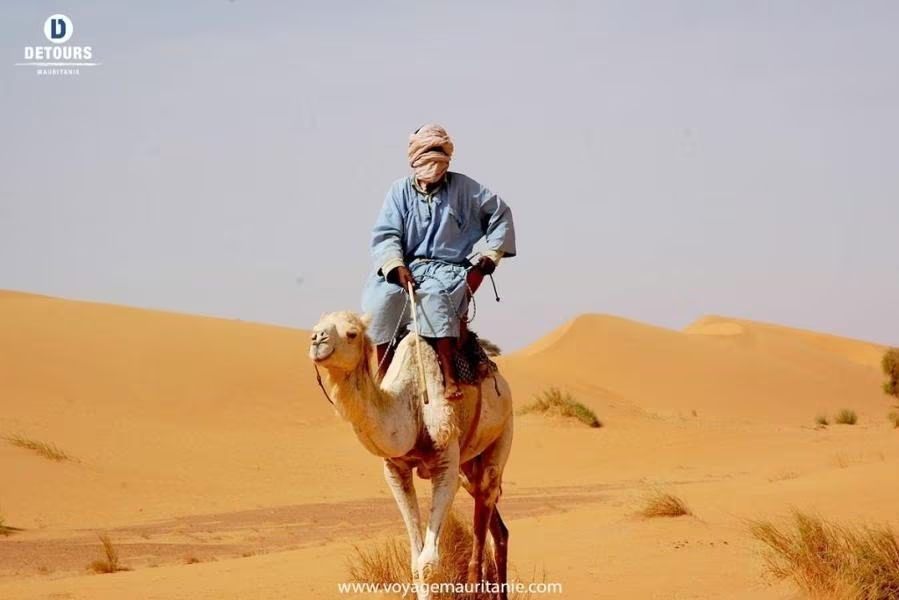
Living under tents on the austere surrounding plateaus, the nomads, essentially from the Ideïchilli confederation, are camel herders. The complementarity between nomadic and sedentary groups is fully expressed here. In prosperous periods, like recent years, the camel herders move very little, as the grazing in the area is sufficient to sustain their animals.
Rainfall has been adequate since 1994, following two decades of severe drought.
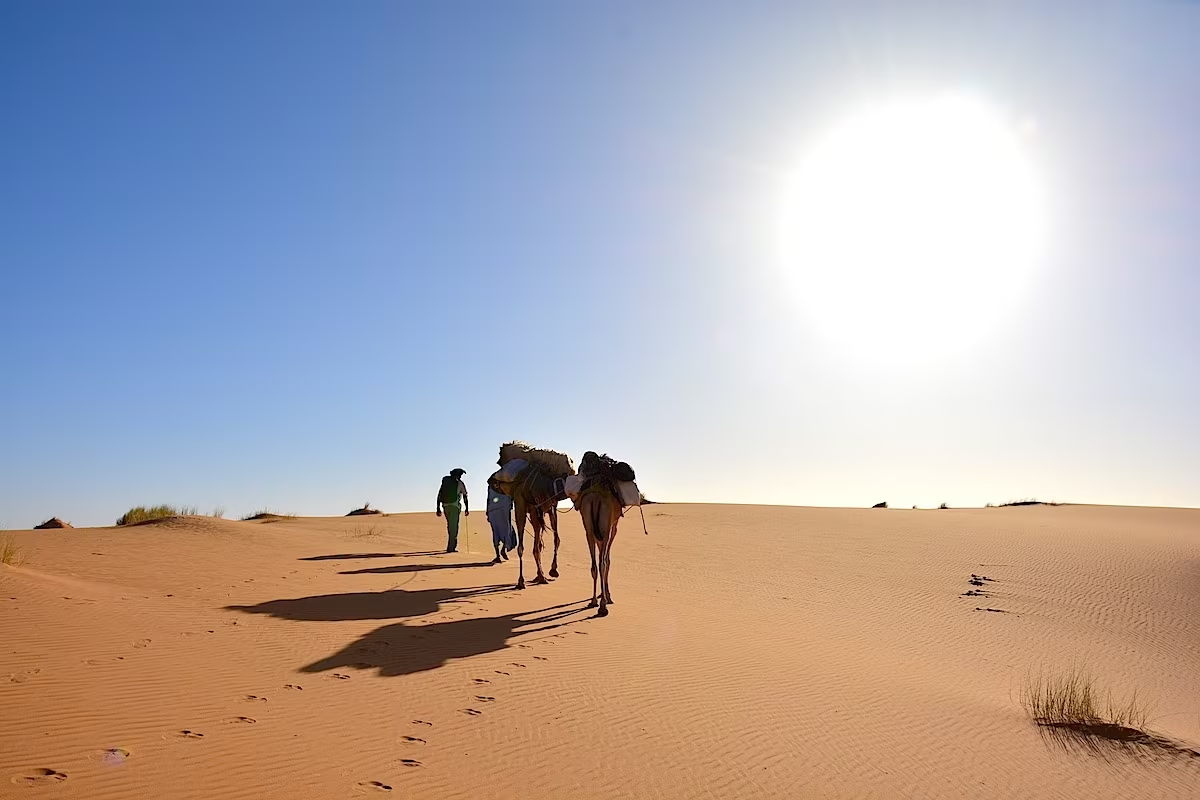
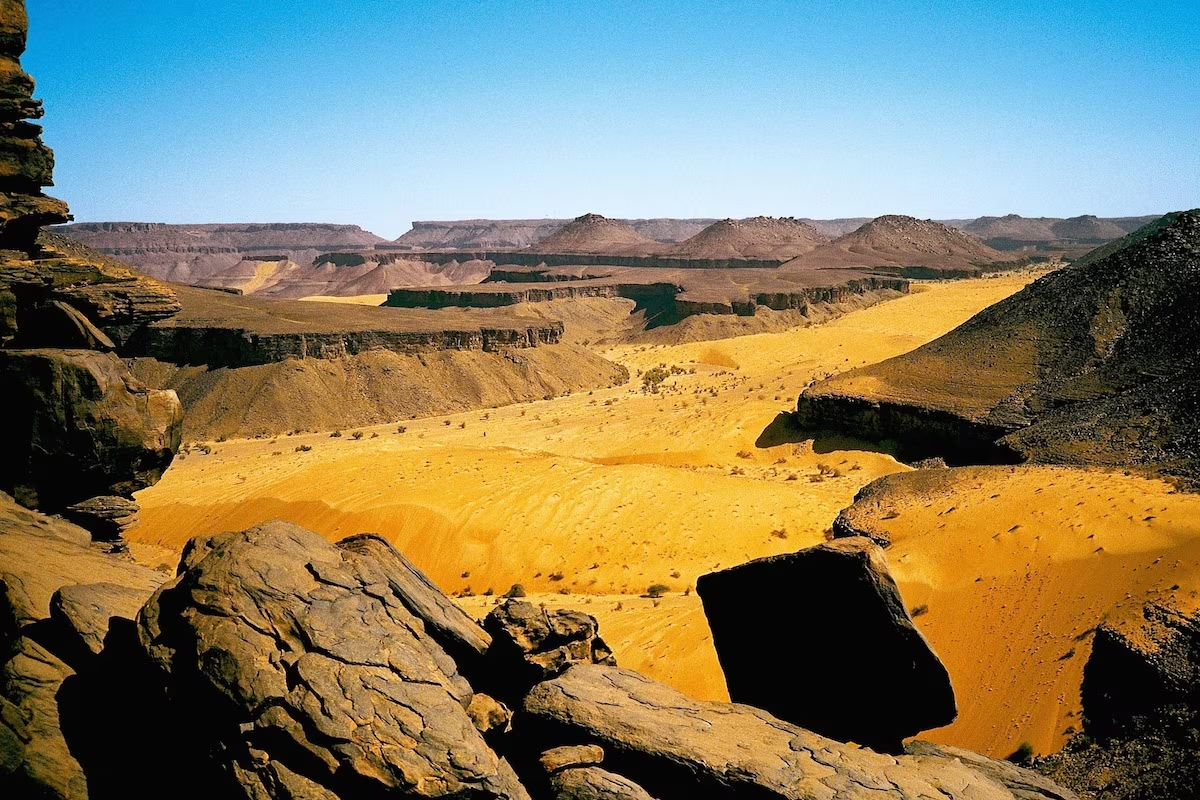
The trek takes place in the wadis Timinit, Toueïrga and El Abiod on the western border of the Adrar. Dune massifs, rock and palm groves are predominant.
This journey is of moderate difficulty level.
The stages of your journey
Highlights
Day-by-day itinerary
International flight to Nouakchott
Paris Aéroport → Nouakchott
Indicative flight proposal: Royale Air Maroc.
We depart in the late afternoon for Mauritania's capital via Casablanca in Morocco. Once formalities are completed, we welcome you in the hall of the Nouakchott airport terminal.
With a short transfer into the city, we reach our hotel in the middle of the night for well-deserved rest.
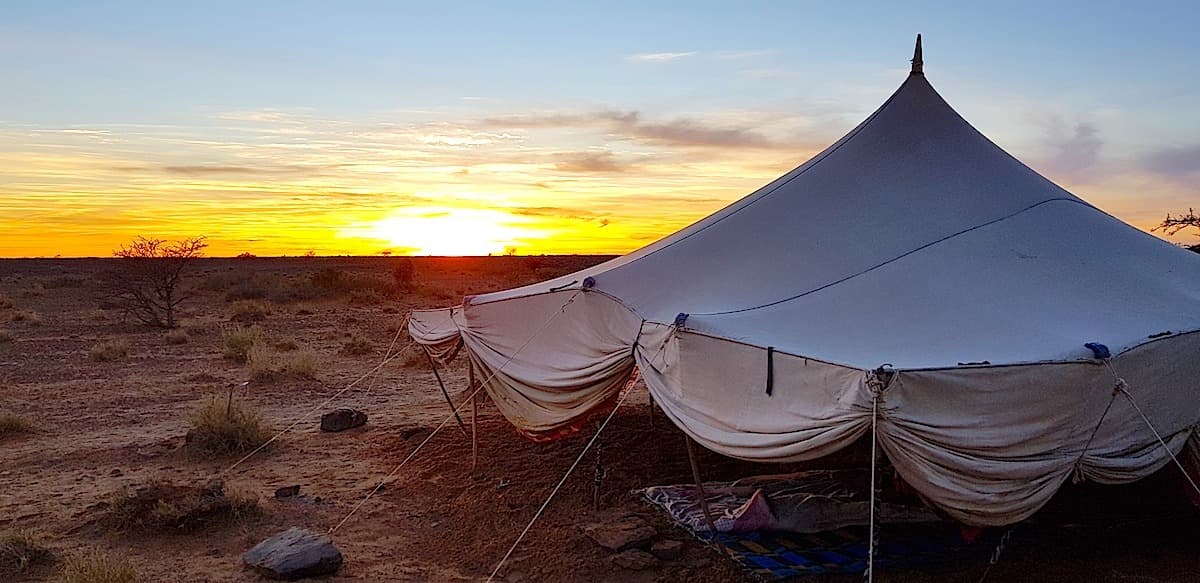
On the way to Tergit oasis
After leaving the city and its surroundings behind, we take the beautiful paved road that heads northeast, towards the mining city of Akjoujt.
The Trarza region and the Atlantic coast are now left behind. The vegetation changes progressively and acquires an increasingly Saharan character. The vast sandy plains of Inchiri lead us to the city of Akjoujt, a place with an almost surreal appearance. Mining activity is present here and, since the Chalcolithic, humans have extracted copper, gold and other minerals.
Little by little, the landscape changes. We now enter the Amsaga region.
In the distance, towards the east, the dark mountain barrier of Adrar begins to take shape. We cross the great alluvial plain of Yagref and the village of Aïn Ahel Taya. The road passes the first step of the Adrar.
We leave the main road that leads to Atar to take the new road heading south. This magnificent paved road leads us, after crossing the entire western Adrar, to the Tagant massif.
Very soon, one of the best-known palm groves of the Adrar appears before us: Terjit.
Tergit → Timinit
The black ribbon now climbs the N'Tourvine pass to reach the rocky plateau. Aoujeft, a large village then we reach the fracture of the Timinit wadi where the green of date palms mixes, the blond of the sands and the dark of rocks patinated by the scorching sun.
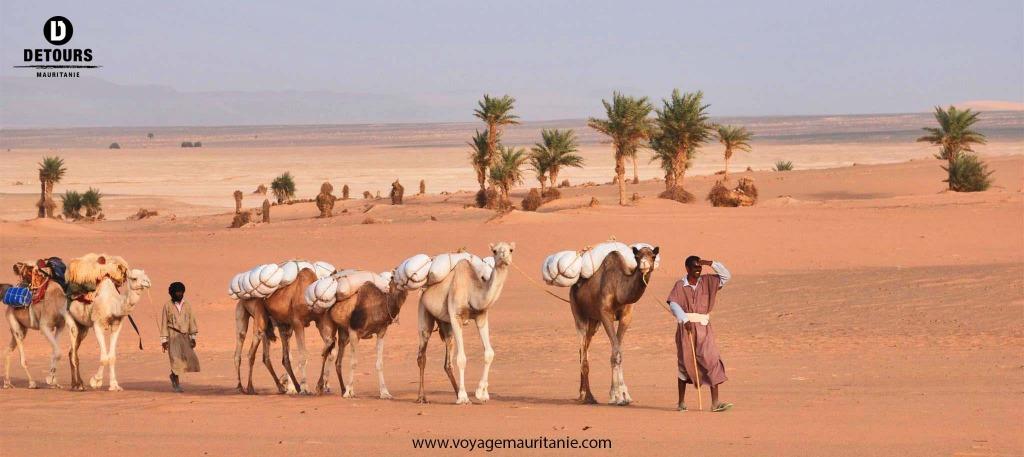
The palm groves of Wadi Timinit, between sand and sandstone
Timinit → Trelissar
On foot, we go up a small tributary of the Timaghazine wadi to reach the Faraoun plateau, soon colonized by barchan dunes that have escaped from the Warane erg.
By late morning, the first palm groves and sedentary villages are reached. The palm groves provide us with temperate locations to spend our midday stops. In the afternoon we return to the banks of the Timinit wadi, upstream from the large village of Wagchodda. The wadi is very sandy, and we must cross this aklé to reach its right bank. Bivouac in the beautiful wooded area of Treliessar.
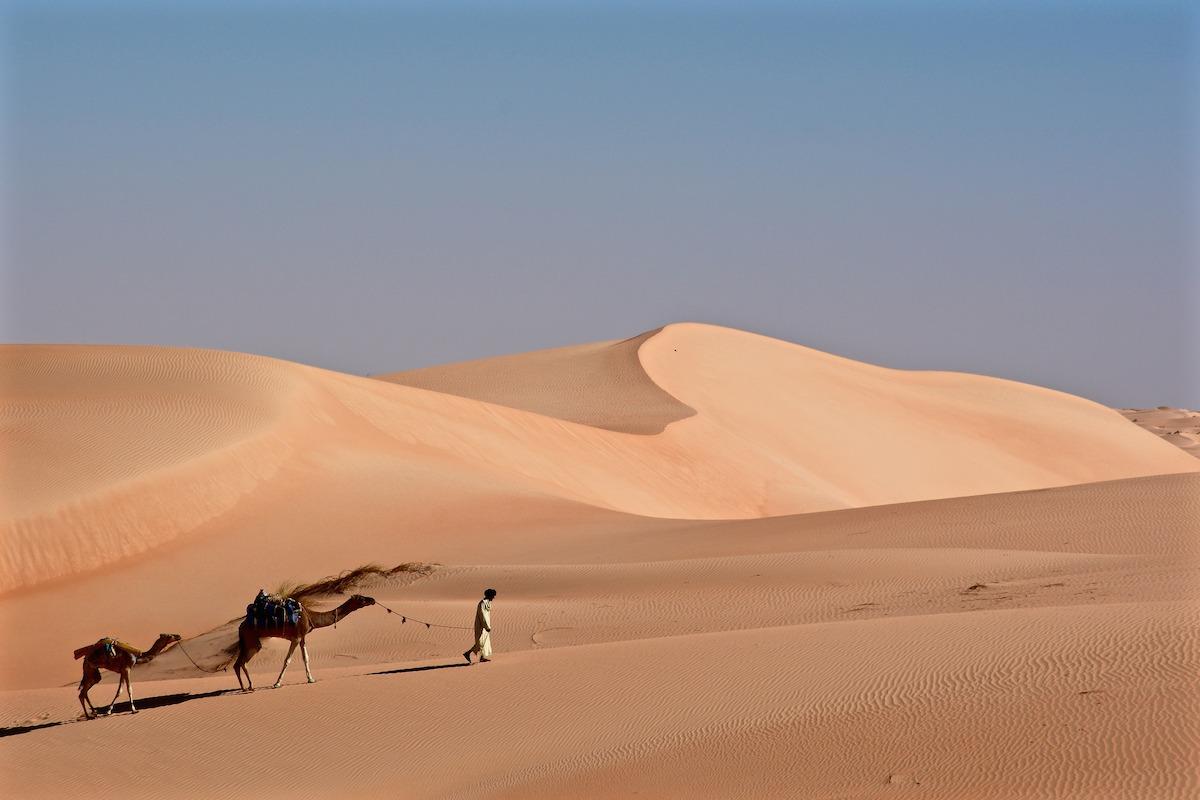
By the small erg of El Madden and the Kediet (mountain)
Trelissar → Tirabane
Balcony overlooking the wadi Touerga, completely cut off by an aklé, we discover the large gardens of the village of Ma'adene where a Smaside religious brotherhood has been established since 1975. Then, via the wadi, we visit the small palm grove of Agmeimine where brackish water emerges; leaving the wadi Toueirga we cross the black sandstone relief of the rocky ridge of Kédiet Eïmert.
A neolithic rock art station, which is quite rare in this area, is visible.
We then descend into the wide valley of the wadi El Abiod. The wadi bed silts up again as it had been cleared of its dunes during a major flood.
Bivouac at Tirabane.
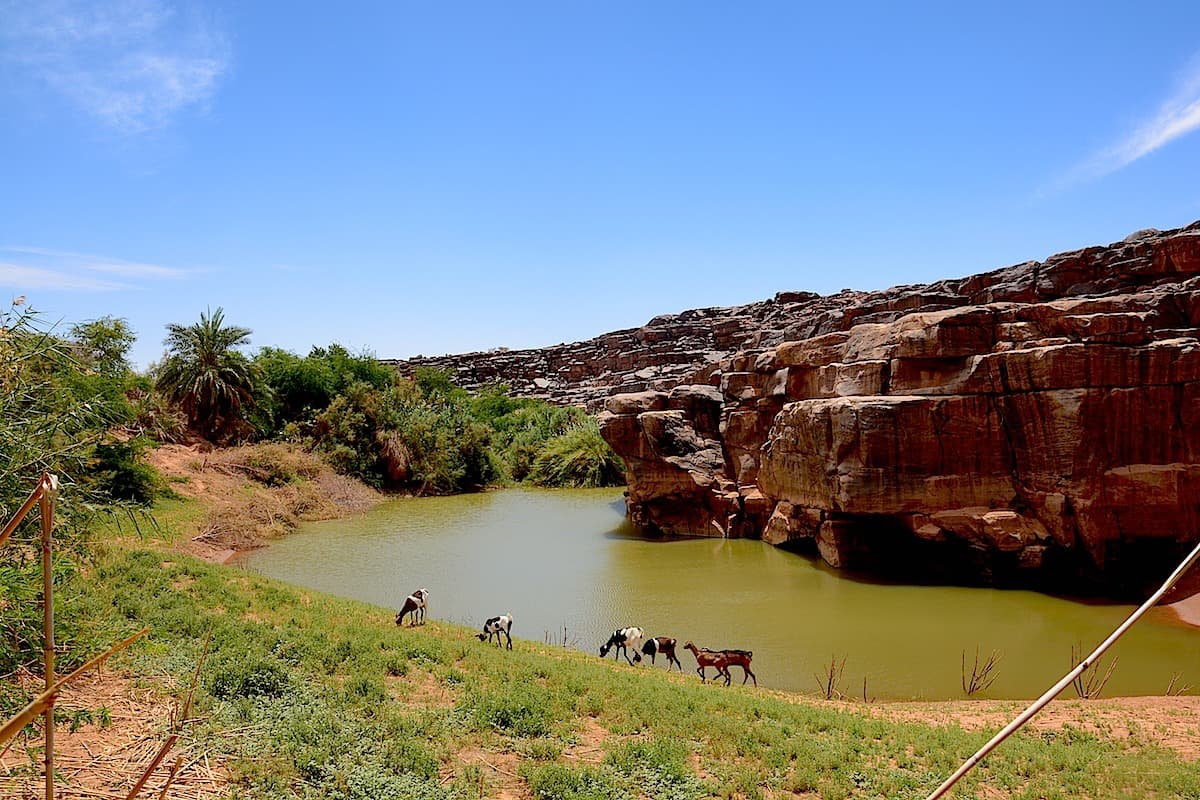
The Wadi El Abiod and the Most Beautiful Oasis of the Adrar, Toungad
Tirabane → Toungad
On a balcony above the wadi we follow the wadi, overlooking the dense forest: the Acacias raddiana, the Balanites aegyptiaca are magnificent here despite deforestation and droughts. Picnic south of Chotou es-Serir, island-mountain set in the fault that the Oued El Abiod runs through.
We climb it and let ourselves "slide" down along the great dune attached to it.
Bivouac in the surroundings of Toungad.
The great dunes of Chatou in Wadi El Abiod
Toungad → Wad el Abiod (Vallée Blanche)
We head towards the guelta of Toungad where it is not uncommon to encounter some migratory birds (white stork, grey heron, various raptors, Saharan or passing through) attracted by the very beautiful body of water.
The Toungad gorge takes us to one of the most important palm groves in the region.
We then continue towards Châtou el-Kbir, the big brother of the previous one and we join the Choumat wadi for picnic (springs, palm trees, colonies of Hyraxes,…).
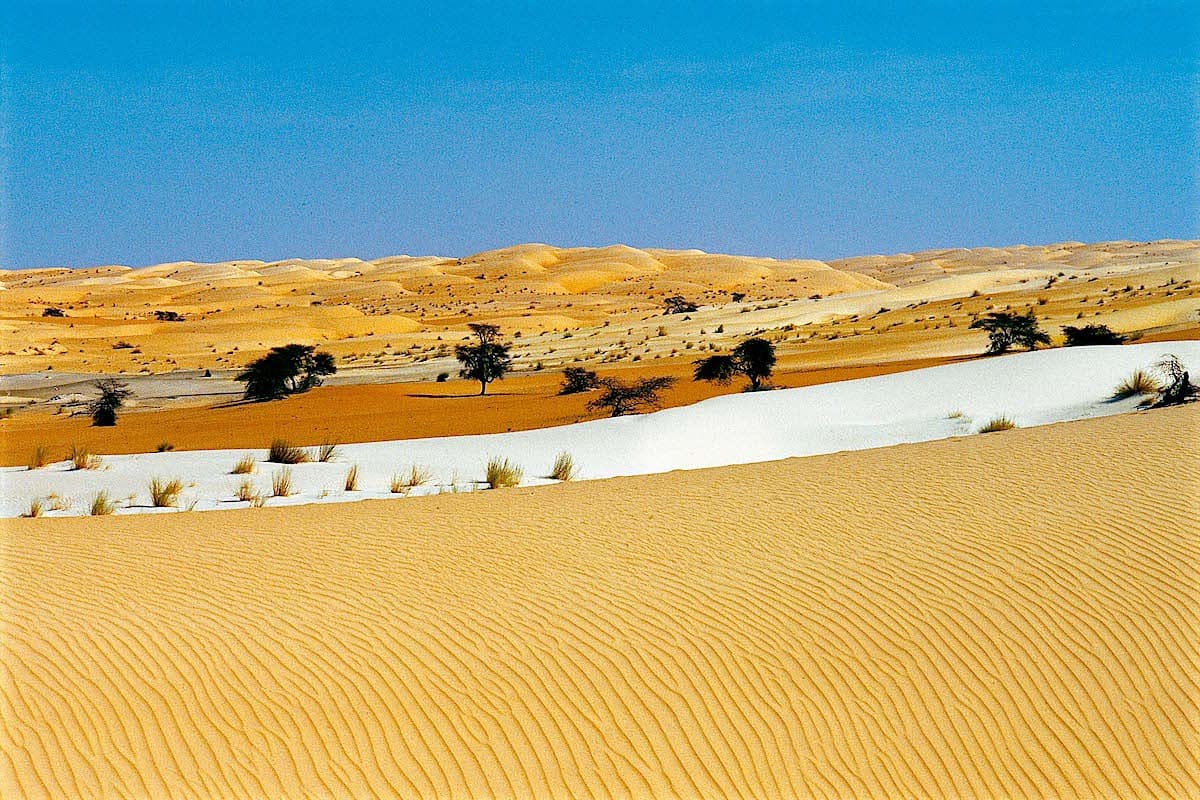
The White Valley, the Tifoujar Pass and the Great Dunes
Wad el Abiod (Vallée Blanche) → Ziret E-n Ouâkane
The hike continues in a north-westerly direction towards the Ziret E-n Ouâkane dune complex, whose highest point we climb. They mark the northern exit of the Oued El Abiod.
We are now on the last ridge of the Adrar. To the west, the vast plains dotted with rocky peaks of the Amsaga open up, extending all the way to the Atlantic coast, 450 kilometers away.
On foot in the cracks of the Adrar, our hike ends at Tergit
Ziret E-n Ouâkane → Oued Et Tazent
We continue our hike through a wide valley of rock and sand. Gradually, the gorge narrows and is blocked by very beautiful sand plugs. Majestic plateaus dominate the entire gorge system. We reach the Oued Et Tazent.
We camp in this setting of rocks and sand near the Tergit palm grove.
Oued Et Tazent → Tergit
We leave our sandy haven to reach the oasis of Tergit located on the road between Atar and the Tagant region to the south.
Return to Nouakchott, and flight to Paris
We quickly leave the palm grove and the dark barrier of the Adrâr begins to take shape. We pass through the village of Aïn Ahel Taya and the large alluvial plain of Yagref.
Gradually the landscape changes. We now drive through the Amsaga region.
In the distance, to the east, the dark barrier of the Adrâr begins to fade.
We continue our journey across the large sandy plains of the Inchiri. Very quickly, we reach the outskirts of the Mauritanian capital.
We settle into the hotel.
Nouakchott → Paris Aéroport
Following your flight schedule to France, we transfer you to the Nouakchott-Oumtounsy International Airport.
Price per person
This trip can be tailored to your preferences
This itinerary provides an excellent foundation for discovery, but it can be fully customized. Our local advisors build each trip tailored to your budget, dates and preferences.
Not included
- International Flight Paris - Nouakchott - Paris
- Visa fees upon entry to Mauritanian territory
- Personal expenses, beverages
- Tips at your convenience
- Annual cancellation, repatriation and emergency assistance insurance
Included
- Welcome and assistance at Nouakchott airport
- Transfer and transport by 4x4 vehicle on D1, D2, D8 and D9
- Camel team for assistance during trekking
- Taken charge of by a chef
- English-speaking local guide trained and experienced with our trips
- All bivouac, kitchen and supply equipment (except sleeping bag)
- Full board throughout your trip in Mauritania
- Jeloua guesthouse in Nouakchott on a double room basis, (subject to availability)
- Auberge des Caravanes in Tergit on double room basis, (subject to availability)
Practical Information
Registration is considered firm and final after payment of a deposit of 40% of the total price and acceptance of the specific terms of sale.
The balance must be paid no later than 45 days before the departure date.
See our specific terms of sale for full details.
In the event of cancellation by the traveller, the following fees apply:
- More than 60 days before departure: 40% of total price (deposit retained)
- Between 60 and 30 days before departure: 50% of total price
- Less than 30 days before departure: 100% of total price
We strongly recommend taking out cancellation insurance. See our specific terms of sale for full details.
The information below concerns travelers who are nationals of the European Economic Area (EEA), Switzerland, and Canada traveling to Mauritania for a tourist stay. As entry rules may change, we recommend verifying this information with the official authorities before your departure.
Passport
To enter Mauritania, your passport must be valid for a minimum of six months after the date of entry into the country and must have at least one blank page for immigration stamps.
The document must be in good condition (no damaged, torn, or altered pages).
Visa
Nationals of the European Economic Area, Switzerland, and Canada must in principle have a visa to enter Mauritania. This visa can be obtained:
from the embassy or consulate of Mauritania in your country of residence before departure,
or, depending on current conditions, upon arrival at Nouakchott International Airport (visa on arrival), for a stay of up to 30 days.
It is strongly recommended to inquire with the Mauritanian authorities or the competent embassy before departure, as visa application procedures may change.
The authorities may request:
an exit ticket from the territory (return or onward flight),
proof of sufficient financial resources for the duration of your stay,
a hotel reservation or an invitation letter.
Health and vaccinations
No vaccinations are officially mandatory to enter Mauritania, with the exception of the yellow fever vaccine if you are arriving from a country where this disease is endemic.
However, several vaccinations are strongly recommended by health authorities:
Hepatitis A and B
Typhoid
Meningococcal meningitis
Rabies (depending on planned activities)
Update of your routine vaccination schedule (diphtheria, tetanus, poliomyelitis)
Antimalarial prophylaxis is recommended for the entire Mauritanian territory. Consult a doctor or an international vaccination center before your departure.
Security and registration
Mauritanian authorities may require the registration of foreign travelers with local police or gendarmerie services within 48 hours of arrival, particularly outside the capital. It is advisable to inquire about the obligations in place at the time of travel.
Due to the security situation in certain regions of the country, it is recommended to consult travel advice issued by the authorities of your country of residence before departure.
Traveling with children
Minors must hold their own valid passport covering the duration of the stay.
In some European countries, when a minor travels without one of their parents, an exit authorization from the territory may be required according to the regulations of their country of residence.
Other nationalities
Entry conditions may vary depending on nationality. Travelers concerned should inquire with the embassy or consulate of Mauritania in their country of residence.
To participate in our trips, it is strongly advised to be insured for evacuation assistance and medical expenses abroad.
Your local agency encourages you to review the specific policy developed with our partners CHAPKA ASSURANCES and AXA ASSISTANCE.
To subscribe to insurance, learn about coverage and rates, follow the link below.
CAP EXPLORER: The comprehensive insurance solution designed for a worry-free journey!
Choose the plan that suits you best:
Explorer'Multirisque
Explorer'Annulation
Explorer'Assistance
Specific to our trips, we strongly recommend subscribing to one of them.
If you choose to subscribe to one of these plans, the policy detailing all coverage and claims procedures are available on the insurer's website.
Your local agency will be aware of this, but only the participant is responsible for complying with claims reporting procedures. The participant should therefore keep this policy with them throughout their trip.
Chapka — Cap Explorer
Our insurance partnerTravel with peace of mind with our partner Chapka. Cancellation, repatriation, medical expenses, baggage… All the coverage for a worry-free trip.
Travel with peace of mind — I'll handle the insuranceFrequently asked questions
A tourist visa is required and is issued upon arrival at Nouakchott Airport or at the consulate. Your passport must be valid for at least 6 months beyond your entry date. The security situation requires heightened vigilance. Before booking your trip, please check with the consulate or embassy of your destination for entry requirements applicable to your nationality.
Go to the My Trips section to find all your projects.
You can send a message to your host directly from the Tea Lounge.
For a tailor-made quality trip, budget between 180 and 300 euros per day and per person, including accommodation, meals, 4x4 with driver and English-speaking guide. International flights (500-800 euros return) are additional. The desert, the Sahara train and the beaches offer unique experiences.
Your documents are accessible in the Documents tab of your trip.
Absolutely. We adapt each itinerary to travellers' profiles. For families, we prioritise relaxed paces, family-friendly accommodations, fun and educational activities, and comfortable private transfers. Our English-speaking local guides know how to capture children's attention with age-appropriate anecdotes.
It's simple. You exchange with our local team to define your wishes, budget and dates. You receive a detailed itinerary proposal within 48 hours. You adjust every detail together until you reach the perfect version. You confirm and travel with peace of mind. Your local agency remains available 7 days a week throughout your trip.
In case of emergency, contact your local agency immediately.
Payment is generally made in two installments.
Our agency is part of the Nomadays network, registered in France. You benefit from APST (Association Professionnelle de Solidarité du Tourisme) coverage, which protects 100% of your funds. Secure payment, professional insurance, and English-speaking assistance 7 days a week on the ground throughout your stay. Travel insurance (assistance and repatriation, cancellation) is not included: we offer it through our insurance partner and strongly recommend it.

Let's talk about your adventure — Adrar
Coordinator of Mauritania getaways, based in Atar
La Mauritanie est un pays qui se découvre avec respect et patience. Mon rôle est d’aider chaque voyageur à s’en approcher dans les meilleures conditions, avec confiance et curiosité.
— Antsa